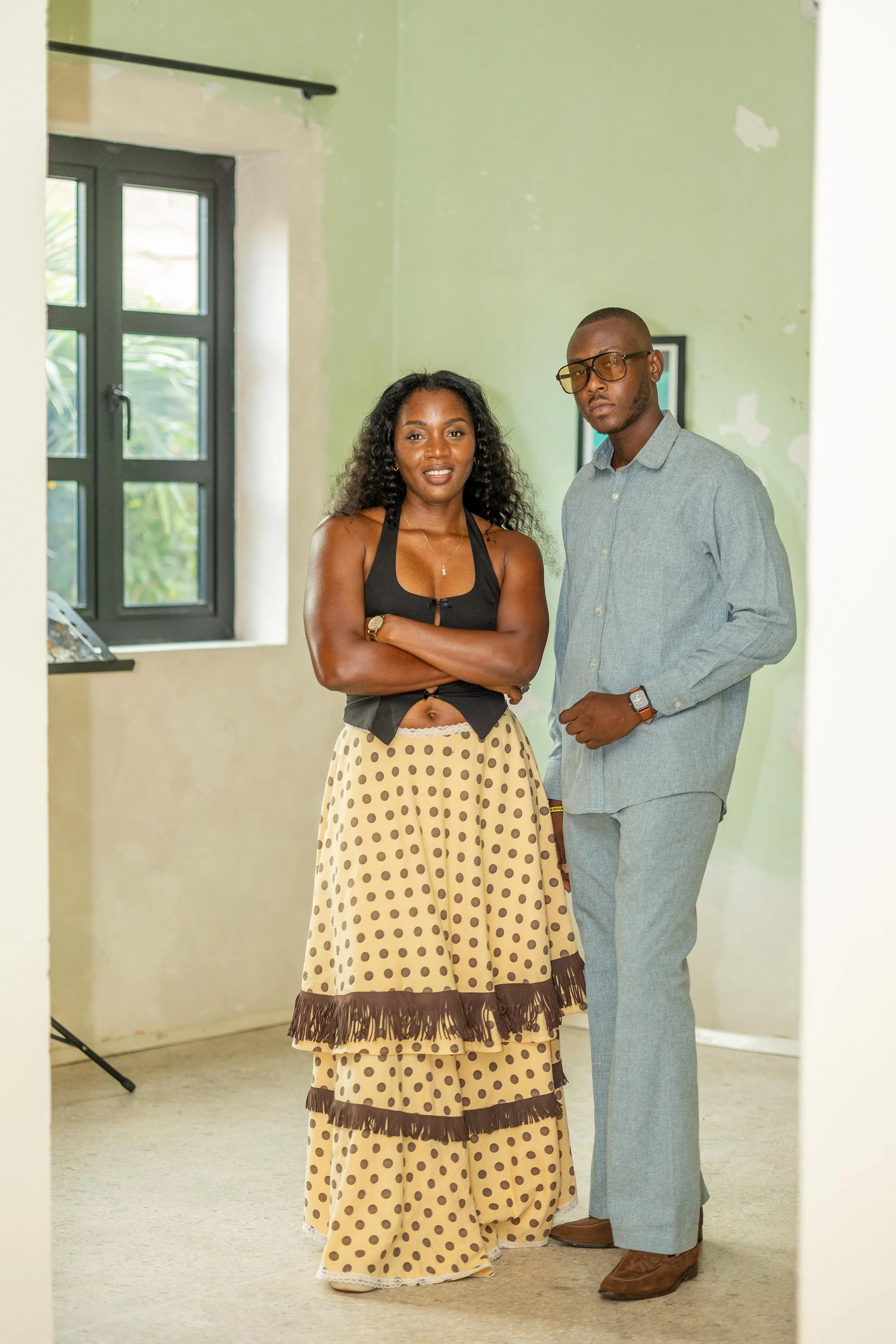
Naa Shika Adu explores African identity, talent and belonging through sport
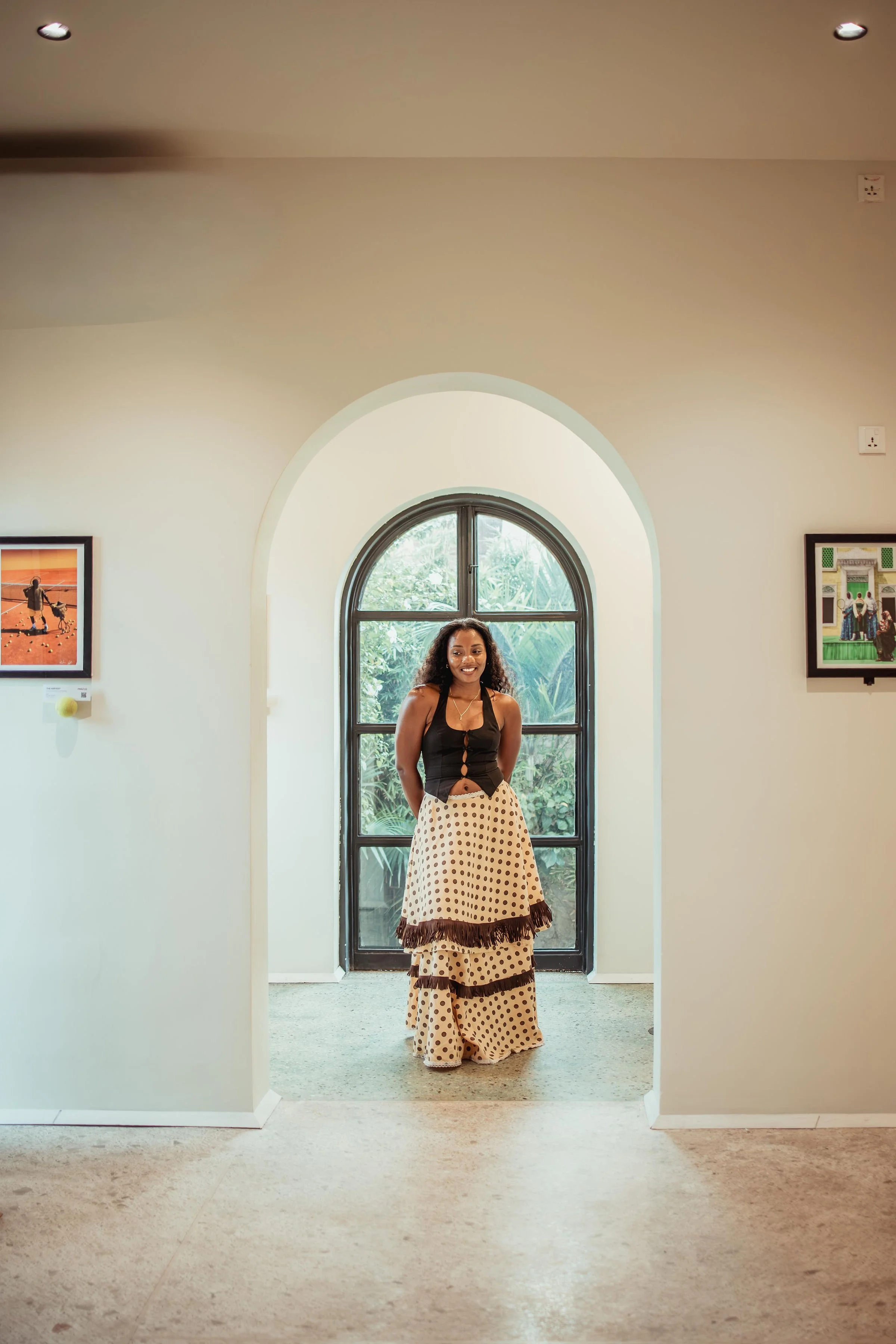
V. L. K. Djokoto
Ghanaian creative and sports entrepreneur Naa Shika Adu has turned the familiar world of sport into a study of identity, ambition and African social life with her first multidisciplinary exhibition, Vernacular of Play.
Rather than treating sport simply as competition, Adu uses it as a cultural language through which larger questions can be examined. The exhibition considers belonging, gender, access to opportunity and the movement of African talent, placing the playing field within the wider social and economic structures that determine who gets to participate, advance and succeed.
Produced in collaboration with artist Reginald Boateng and co-curated by Whitney Chinonye Ernest, Vernacular of Play brings together photography, digital art and film. The exhibition is grounded partly in Adu’s own relationship with sport and her experiences navigating spaces traditionally dominated by men. It also considers what happens when individual ambition grows faster than the institutions expected to support it.
Tennis provides much of the visual and conceptual language of the project, but the sport itself is not its final subject. The court becomes a representation of society, complete with lines, rules, boundaries, access and exclusion. In this sense, play becomes a useful way of examining the organisation of social life.
The exhibition includes works such as Catch Me Becoming, Between the Lines and The Harvest. Together, the pieces move from childhood and possibility towards questions of boundaries, institutional power and the migration of African talent. The sequence gives the exhibition a broader social character, moving beyond personal recollection towards a consideration of the conditions under which African ambition develops.
In Catch Me Becoming, Adu returns to childhood and the possibilities associated with movement and play. Sport is presented as a place in which imagination can develop before the social boundaries of adulthood become fully visible. Childhood therefore becomes more than nostalgia; it represents a period in which possibility can appear relatively unrestricted.
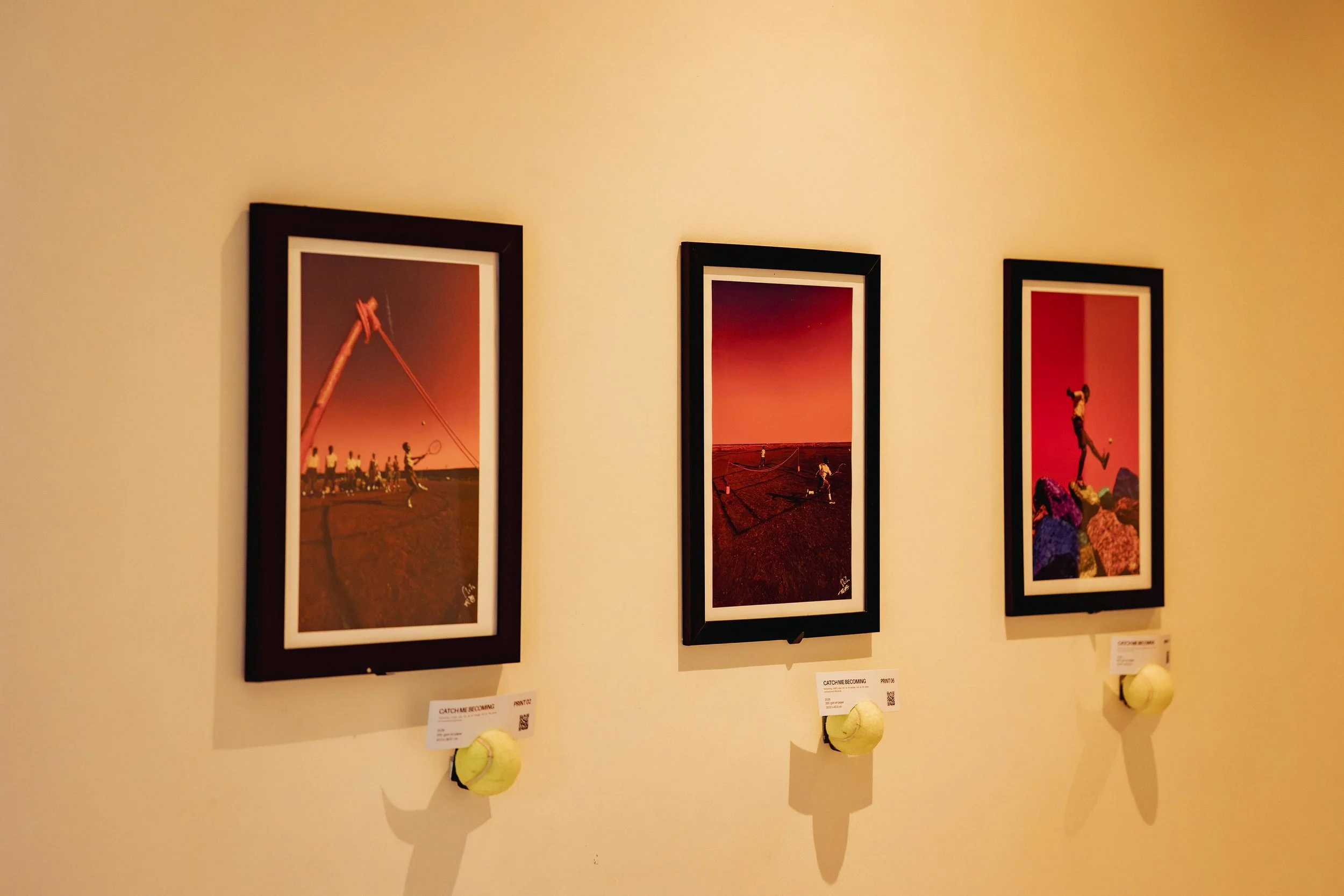
Between the Lines shifts the emphasis towards boundaries. Some of these boundaries are immediately visible, while others are inherited through social convention and institutional structures. Questions of who is permitted to enter, excel, lead and belong become particularly significant in relation to spaces historically dominated by men.
The argument reaches beyond sport in The Harvest. Here, Adu considers the movement of African athletes, professionals, creatives and thinkers whose ambitions can exceed the capacity of the institutions surrounding them. Their eventual movement elsewhere becomes not simply a story of personal migration, but a reflection of the relationship between African talent and African infrastructure.
This is perhaps the exhibition’s most recognisable social question. Across several fields, African societies produce people whose skills are subsequently developed, financed or rewarded elsewhere. The athlete who leaves for better training facilities and the professional who leaves for stronger institutions may occupy different industries, but both reveal the same tension between the production of talent and the capacity to retain it.
For Adu, the exhibition also emerges from personal reflection. She has described Vernacular of Play as an attempt to understand both what sport has given her and what it has taken from her. Art provides another language through which that relationship can be examined beyond the immediate rules and results of competition.
That movement from sport into art gives the project much of its cultural interest. A tennis court is ordinarily understood through scores, winners and losers, but Vernacular of Play asks what else exists within that space. There are questions of discipline, class, gender, access, aspiration and the institutions required to turn ability into achievement.
Sport has always carried these meanings, even when they are obscured by the spectacle of competition. Stadiums, courts and playing fields are social spaces in which questions of nationality, race, gender, wealth and belonging regularly become visible. Adu's exhibition takes these underlying meanings and places them at the centre of the conversation.
The title, Vernacular of Play, is therefore instructive. A vernacular is a language formed and understood through a particular social experience. Adu treats play in much the same way: as a language through which African experiences can be communicated and interpreted.
The exhibition also places her within a wider generation of African cultural practitioners whose work moves easily between established creative categories. Photography, digital imagery, film, sport and social commentary coexist within the same project rather than being treated as separate disciplines. The multidisciplinary form reflects a contemporary cultural environment in which the boundaries between artist, entrepreneur, curator and creative director have become increasingly fluid.
More importantly, the project places ordinary human movement within a political and cultural context. Running, serving, competing, crossing a line or remaining outside one can acquire meanings beyond the physical act itself. The rules of a game can consequently become metaphors for the rules through which society distributes opportunity.
This is particularly evident in the exhibition’s treatment of gender. Sporting institutions have historically reflected wider assumptions about who is expected to occupy positions of visibility, authority and leadership. By drawing upon her own navigation of male-dominated environments, Adu places the personal experience of sport within a larger conversation about women’s access to public and professional space.
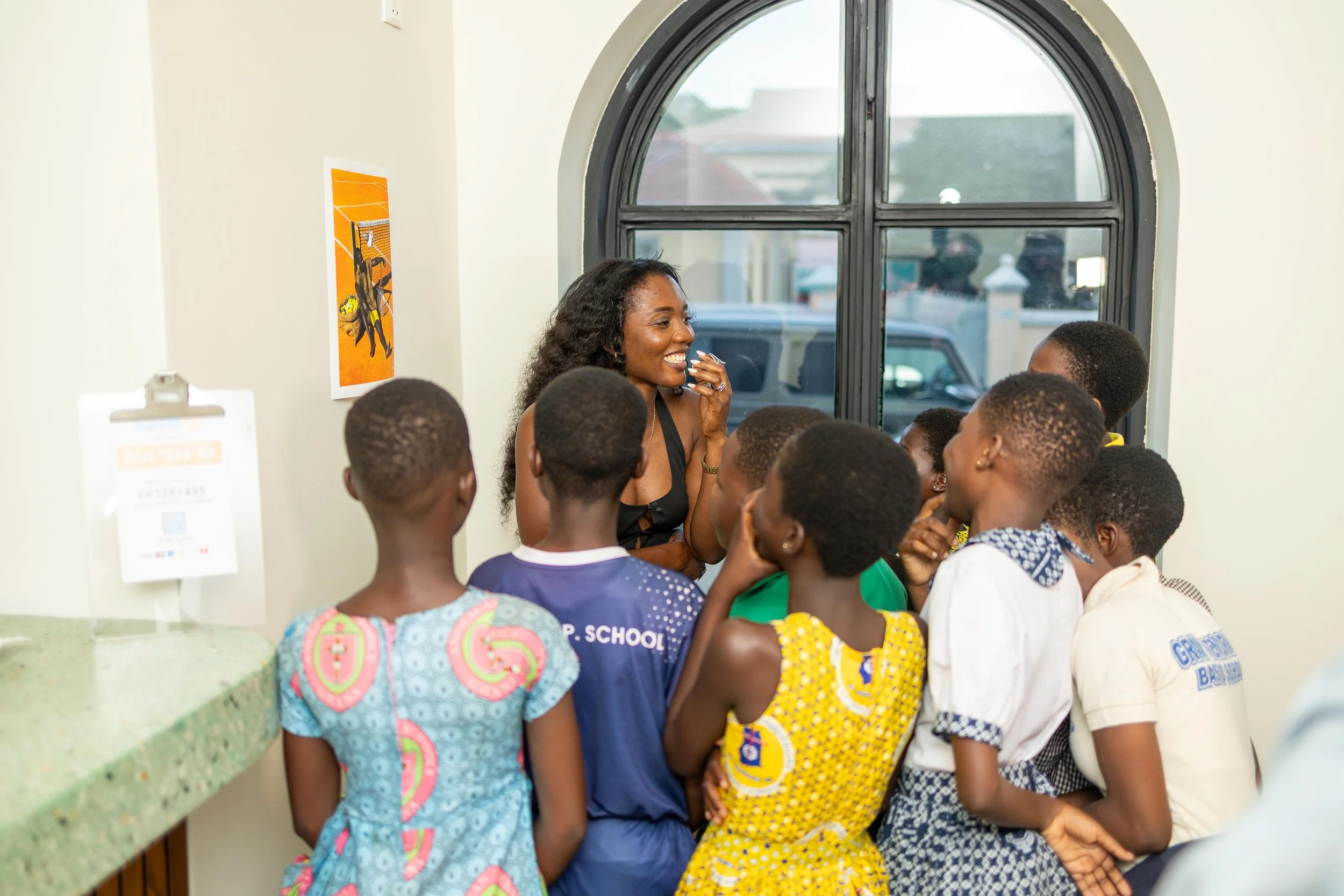
The question of belonging operates in a similar way. Every sport creates boundaries between participants and spectators, professionals and amateurs, winners and losers. Society produces comparable distinctions through education, wealth, gender, geography and access to institutions.
Vernacular of Play consequently uses the simplicity of the game to examine the complexity of the world surrounding it. What initially appears to be an exhibition about tennis gradually becomes an exhibition about structures. The court is important precisely because it allows those structures to become visible.
The exhibition also reflects the growing confidence with which contemporary Ghanaian creatives are approaching subjects outside the conventional boundaries of fine art. Sport is not presented as a lesser cultural activity requiring elevation by art. Instead, it is recognised as a serious repository of memory, identity and social experience in its own right.
That distinction matters in Ghana, where football, boxing, athletics and other sports have long contributed to ideas of community and national identity. Sporting achievement can create collective memory with an intensity matched by few other areas of public life. Yet the institutions surrounding sport also reproduce many of the inequalities and limitations found elsewhere in society.
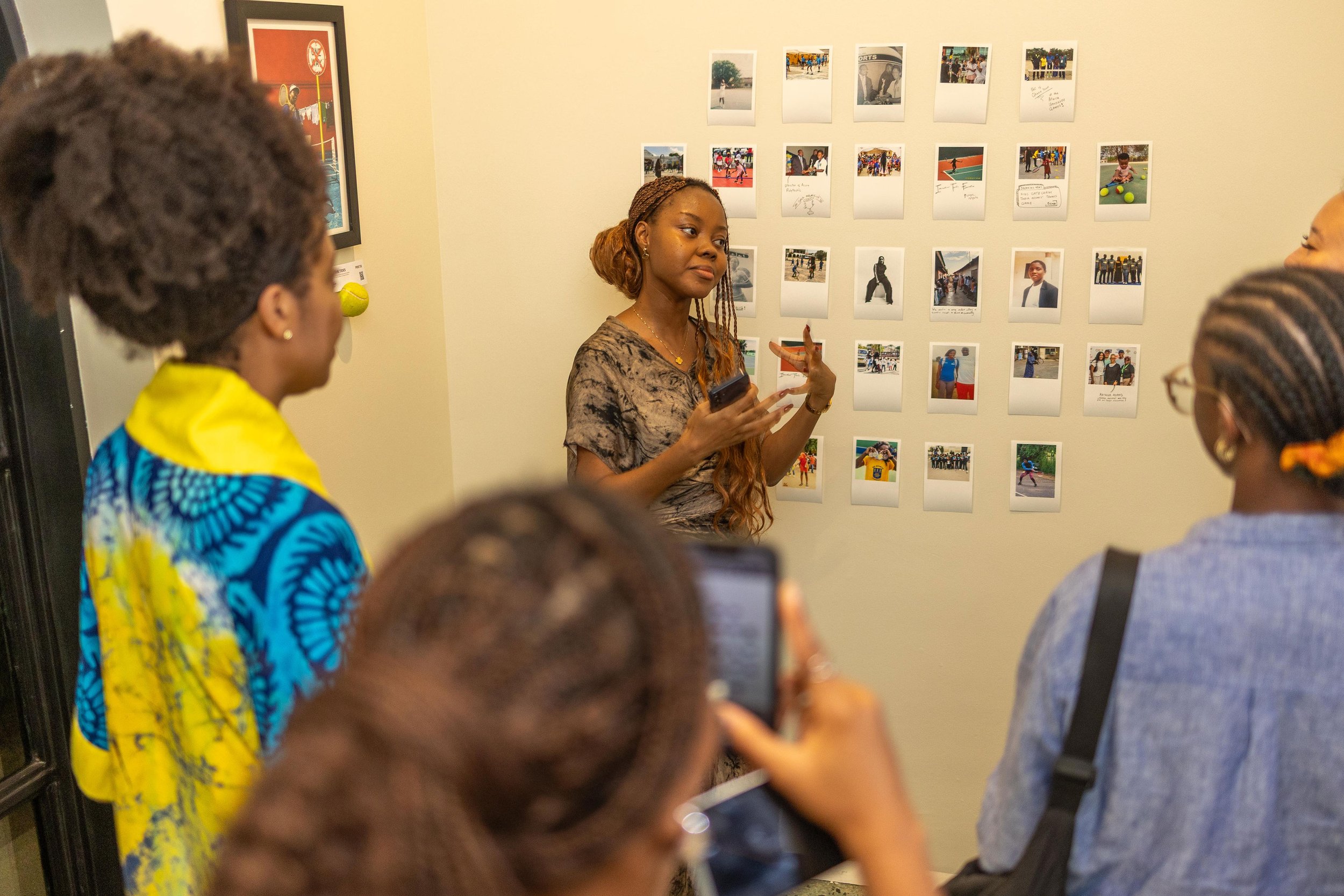
Adu's project enters that contradiction. Sport can create possibility while exposing inequality; it can generate belonging while establishing boundaries; and it can produce exceptional talent without necessarily possessing the structures required to sustain that talent. Vernacular of Play uses these contradictions as material for cultural inquiry.
The exhibition is intended to continue beyond its first presentation. A second edition is planned for Kenya, where the project is expected to respond to another African social and cultural environment. The change of setting could allow the language of play to reveal both shared continental experiences and the differences produced by particular national contexts.
For Naa Shika Adu, then, sport has become more than subject matter. It is a method for examining society. Through Vernacular of Play, the familiar lines of the court become lines of access, power and belonging — and play becomes a means of asking who gets to participate in the larger game.