
Romuald Wadagni and the Inheritance of Power: Benin After Patrice Talon
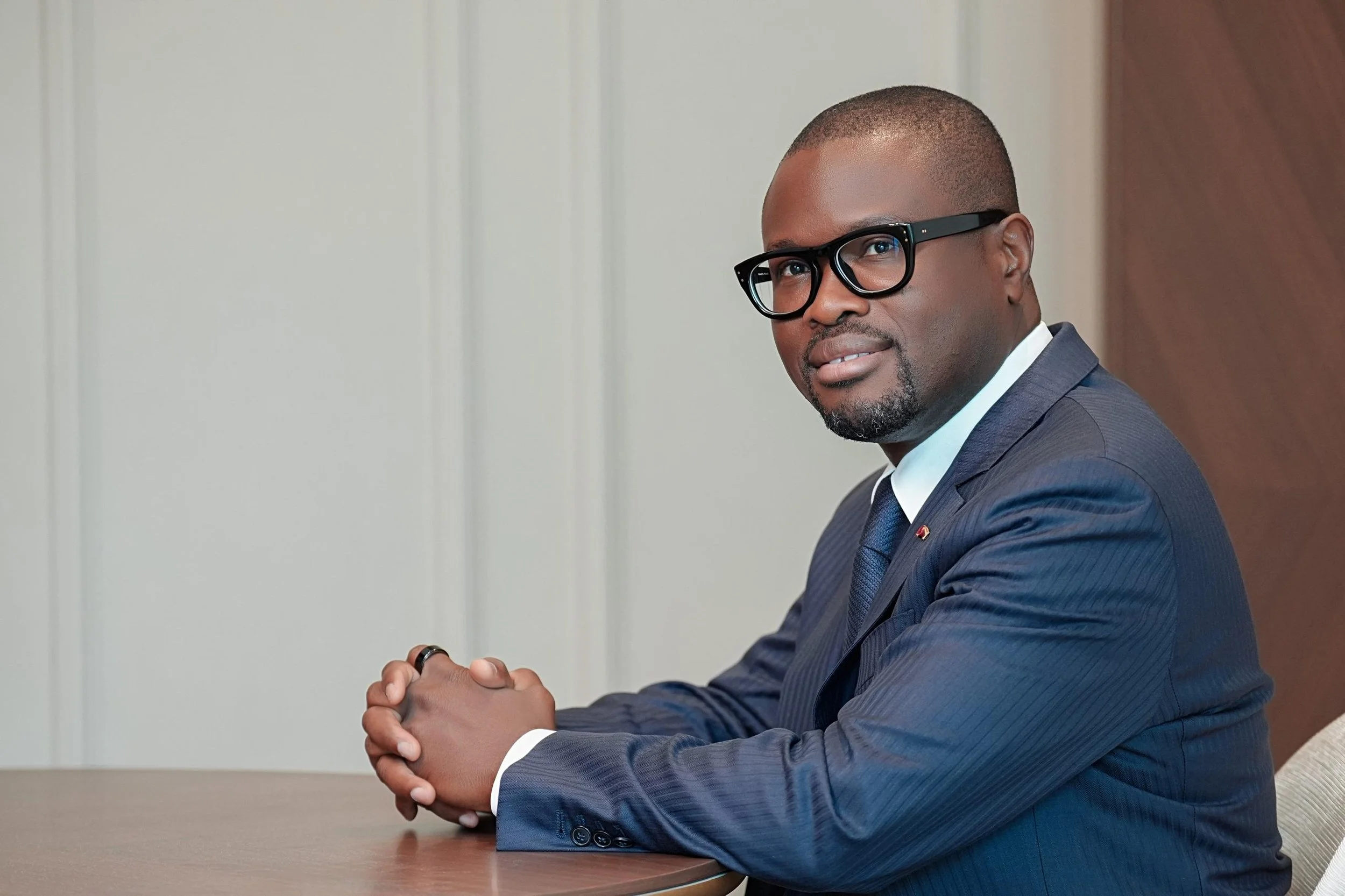
President Romuald Wadagni
V. L. K. Djokoto
There is something rather revealing about the manner in which Romuald Wadagni has arrived at the presidency of Benin, for he has not emerged from the familiar theatre of African political life as a tribune of the people, a revolutionary, a veteran of opposition, or even, in the conventional sense, a politician at all; he has come instead from the quieter rooms of public finance, from the austere world of budgets, sovereign debt, fiscal balances and development programmes, having spent a decade as Patrice Talon’s Minister of Economy and Finance and, in that capacity, becoming one of the principal custodians of the transformation which Talon sought to impose upon the Beninese state.
When he took the oath of office on 24 May 2026, following an electoral victory of more than 94 per cent on 12 April, Wadagni therefore inherited something rather more complicated than a government: he inherited an argument about what a modern African state ought to be, an argument written in roads and industrial parks, in fiscal discipline and investment, in the reorganisation of public administration, but also in the more difficult questions of political competition, civic space and the proper limits of executive power.
Patrice Talon’s great political proposition was, in essence, that the Beninese state had to learn again how to act, and there was something almost Nkrumahist in the seriousness with which his administration approached the business of construction, production and reform; where the post-colonial state had too often appeared as an elaborate apparatus for distributing appointments, issuing declarations and presiding over scarcity, Talon sought to make it a machine capable of delivering roads, industrial capacity, digital services, tourism infrastructure, fiscal stability and economic growth, and his administration’s achievements therefore deserve to be considered with the seriousness due to any substantial attempt at state-building rather than dismissed simply because the political model which accompanied them has remained controversial.
Under Talon’s presidency, Benin’s economy expanded strongly, industrialisation became a more deliberate component of national policy, and the state acquired a greater reputation for administrative execution, but the political settlement around this transformation also narrowed the field within which opposition could operate, leaving the country with the peculiar modern African paradox of a state that appeared increasingly capable of doing things while its political system appeared increasingly less comfortable with being contradicted.Wadagni’s significance lies precisely in the fact that he is neither the rejection of this inheritance nor its mere repetition, but its human continuation, and the distinction is important because the habits which make a good finance minister are not necessarily the habits which make a great president; the finance minister asks whether the numbers balance, whether the expenditure is sustainable, whether the debt can be serviced, whether an investment will produce a return and whether the machinery of government can be made more efficient, whereas the president must eventually ask a more elusive question, which is whether the citizen feels that the republic belongs to him.
This is the point at which economics becomes politics, because growth, however impressive, is an abstraction until it enters the household, the market, the school, the clinic and the village, and Wadagni himself appears to understand this transition, having placed considerable emphasis since assuming office upon ensuring that economic growth translates into concrete improvements in ordinary people’s lives, alongside security, social protection and a more even distribution of development across the country.
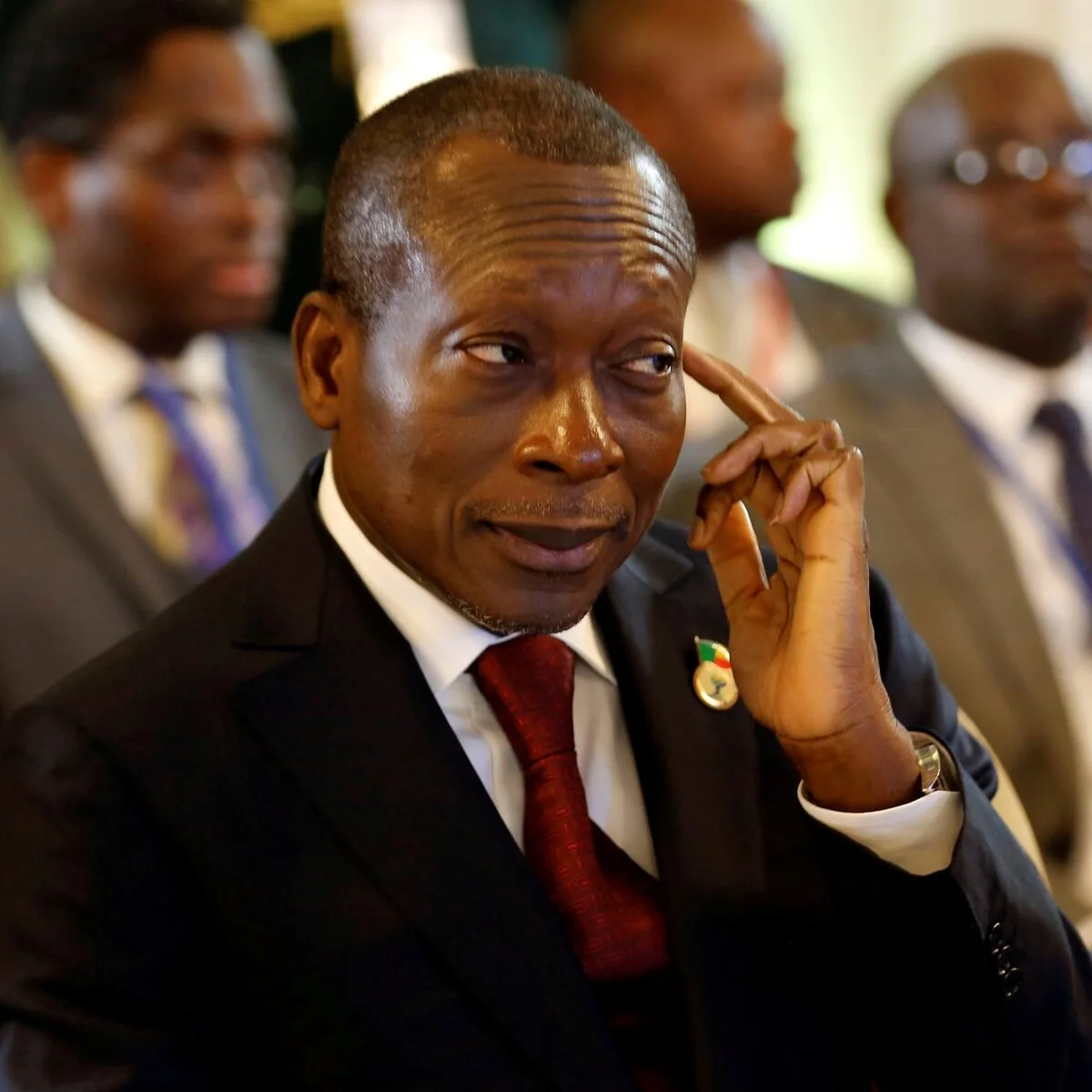
Former President, Patrice Talon.
It is perhaps here that one begins to understand the deeper character of Wadagni’s presidency, because he appears to have inherited from Talon the conviction that the state must be disciplined but has recognised that discipline alone cannot supply political legitimacy; a government can balance its books and still lose the confidence of its citizens, it can construct impressive infrastructure and still fail to answer the anxieties of the young, it can attract international investment and yet leave the ordinary trader wondering whether the prosperity being announced in official statistics has actually reached her stall, and it is this distance between macroeconomic achievement and lived experience which Wadagni must now cross. The language of his first presidential interventions has therefore been significant, because rather than presenting economic growth as an end in itself, he has spoken of growth as an instrument for improving the conditions of life, and in that formulation there is a quiet acknowledgement of one of the oldest truths of political economy: that figures are useful only insofar as they illuminate human circumstances.
The temptation for a technocratic president is, of course, to believe that every political problem is simply an economic problem awaiting better management, but nations are not corporations and citizens are not shareholders, for the republic is made not merely of capital and institutions but of memory, emotion, identity, grievance, hope and the peculiar human desire to feel that one’s voice has some weight in the affairs of the country. Wadagni’s professional formation may make him unusually well equipped to understand the machinery of the state, but his presidency will require him to master something which cannot be found in an audit manual: the art of political listening.
He will have to understand that opposition is not necessarily obstruction, that disagreement is not necessarily disloyalty, and that a confident government should be able to tolerate criticism without interpreting every criticism as an assault upon the state itself, because the strength of a republic is not measured by the absence of dissent but by its ability to absorb dissent without falling apart. This is particularly important because Wadagni’s extraordinary electoral majority does not entirely resolve the question of political legitimacy; it may demonstrate the overwhelming dominance of the governing political establishment, but it also sits within a wider political environment in which the opposition has been weakened and the range of genuine electoral competition has become narrower than the democratic renewal of the early 1990s once suggested.
The danger for Wadagni is therefore not simply that he might become unpopular, for every government eventually does, but that the political system around him might become so accustomed to continuity that alternation itself begins to appear abnormal. A mature democracy must be capable not only of transferring power peacefully from one president to another within the same political family but also of allowing a genuinely different political coalition to govern without treating the event as a national calamity, and the ultimate measure of Wadagni’s democratic inheritance will consequently be whether Benin becomes sufficiently confident in its institutions to permit political competition without fearing that competition will undo the achievements of the state.
There is a particular irony in the fact that Wadagni’s greatest political opportunity may therefore lie in distinguishing himself from the man who made his presidency possible, not by repudiating Talon but by completing what Talon’s model left unfinished; Talon demonstrated that an African government could be purposeful, impatient with bureaucratic inertia and serious about infrastructure and economic transformation, while Wadagni has the opportunity to demonstrate that such purpose can coexist with a broader political settlement, that administrative competence need not require political uniformity, and that a state can be strong without becoming closed. This would be no small achievement, because Africa has spent much of its post-colonial history moving between two unsatisfactory extremes, between governments that possess democratic legitimacy but lack the administrative capacity to deliver their promises and governments that possess the capacity to deliver but regard democratic contestation as an inconvenient interruption to the business of development.
The better future lies somewhere beyond this false choice, and Benin is unusually well placed to search for it because its history contains both the memory of democratic renewal and the more recent experience of developmental centralisation. The country has known the extraordinary possibilities of political reinvention, and it has also known the attractions of order, efficiency and executive authority, but the task now is to reconcile these traditions rather than allowing one to consume the other. Wadagni’s presidency may consequently become an experiment in whether the technocratic state can acquire a more generous political imagination, whether the language of fiscal discipline can be translated into the language of social dignity, and whether the machinery of development can be made to serve not simply the measurable economy but the immeasurable confidence of a people in their own future.
His background makes the question all the more intriguing, because there is something almost poetic about a man trained to read balance sheets becoming responsible for balancing a nation; the first balance sheet records assets and liabilities, income and expenditure, debt and reserves, whereas the second contains less tangible accounts, the confidence of the young, the patience of the poor, the expectations of entrepreneurs, the anxieties of families, the pride of citizens and the faith that tomorrow will be better than today. The former can be calculated to the last franc, while the latter can be destroyed by a single political misjudgement, and Wadagni will therefore have to discover that the presidency is not simply the highest office in the state but the place where all the contradictions of the state eventually arrive. His first diplomatic gestures have also suggested an awareness that Benin’s destiny cannot be understood in isolation from the wider West African environment, particularly the relationship with Nigeria, the region’s demographic and economic giant, and the security pressures emanating from the Sahel.
His first official foreign visit was to Nigeria in June 2026, only days after his inauguration, an early indication that regional cooperation, economic integration and security will form an important part of his conception of national interest. This is not merely sensible diplomacy; it is a recognition of geography as destiny, for Benin’s prosperity depends upon the movement of goods, people, energy and capital across borders, while its security cannot be separated from the turbulence of the wider region. The small state must therefore possess a large imagination, and Wadagni’s Benin will have to become simultaneously more self-confident at home and more strategically engaged abroad. Yet there remains an even larger question, one which extends beyond Wadagni and beyond Benin, concerning the kind of political modernity that Africa wishes to construct for itself.
There is a tendency in discussions of African development to speak of modernisation as though it were principally a matter of concrete, steel, fibre-optic cables, industrial parks and well-designed public buildings, but civilisation is not only what a government constructs; it is also what a government permits. A truly modern state must therefore possess two architectures, the architecture of material development and the architecture of civic freedom, and neither can safely be sacrificed to the other. Roads matter, but so do rights; industrialisation matters, but so does accountability; fiscal stability matters, but so does political confidence; and the real measure of modernisation is not whether a government can build a splendid road but whether the republic remains sufficiently open for its citizens to decide, peacefully and freely, who should travel upon it and who should govern them.
Wadagni’s greatest challenge, then, is not to prove that he can govern differently from Talon, for the early evidence suggests that continuity will remain an important principle of his administration; it is to prove that continuity can evolve. The first generation of reform may build institutions of execution, while the second must build institutions of trust, and the distinction between the two is the distinction between a state which works and a state which belongs. If Wadagni can preserve the economic discipline of the Talon years while widening the social distribution of its benefits, if he can maintain the momentum of industrialisation while creating greater opportunity for young Beninese, if he can strengthen security without allowing insecurity to become a permanent justification for political restriction, and if he can make the institutions of the republic sufficiently confident to withstand genuine opposition, then his presidency may come to represent something more important than succession. It may represent maturation.
For the history of African politics is littered with presidents who wished to be remembered as builders, reformers, liberators or fathers of the nation, but the more difficult achievement is to become the custodian of institutions which no longer require the personality of the president to give them direction. The true test of Talon’s legacy is therefore not whether Wadagni continues his programme, and the true test of Wadagni’s presidency will not be whether he surpasses Talon’s record in kilometres of roads, percentages of growth or numbers of industrial investments; the deeper test is whether Benin becomes capable of carrying its development beyond the personalities who initiated it. A country reaches political maturity when the institution becomes more important than the individual, when the policy survives the politician, when the civil servant serves the republic rather than the president, and when the citizen knows that government is a temporary custodian of permanent national interests.
Romuald Wadagni consequently begins his presidency with an inheritance both enviable and dangerous: enviable because he takes command of a state whose economic and administrative foundations have been considerably strengthened, dangerous because he must demonstrate that the success of the previous decade was not merely the product of an exceptionally determined political centre. His task is to turn performance into legitimacy, growth into opportunity, stability into confidence and continuity into something more generous than the preservation of an existing order. He must show that the modern African state can be disciplined without being austere, ambitious without being overbearing, prosperous without becoming unequal in spirit, and secure without becoming suspicious of liberty.
There is, finally, something deeply African about the wager before him, because the question of the continent has never been simply whether it can produce wealth, but whether it can construct societies in which wealth, dignity and political freedom reinforce one another rather than compete for space. Wadagni comes to this question from the world of numbers, but his presidency will ultimately be judged in the language of human experience, in the quiet judgement of the mother who can afford to educate her child, the young man who can find useful work, the entrepreneur who can build without patronage, the farmer whose harvest can reach a market, the citizen who can criticise government without fear, and the voter who knows that the ballot remains more powerful than the personality who occupies the palace.
Patrice Talon taught Benin, perhaps more forcefully than any president before him, that a government could decide to move and then make the machinery of the state move with it; Romuald Wadagni now inherits the more delicate task of persuading the Beninese people that movement is not merely something done to them by government but something in which they themselves have a stake. That is the difference between development as administration and development as national consciousness, between a country that is being transformed and a people who believe that they are transforming it.
The road ahead, therefore, should not be measured only by the distance Benin travels but by the number of its citizens who feel that they are travelling with it. For a government may build the road, pave the road, illuminate the road and even name the road, but the republic belongs finally to those who walk upon it; and if Romuald Wadagni can make that simple truth the quiet principle of his presidency, then the succession from Talon will have been more than the orderly transfer of an office. It will have been the beginning of something rarer: the transformation of political continuity into national confidence, and of economic modernisation into a more complete idea of what it means for an African republic to become master of its own future.