
Leslie Larte Lartey: Engineering Accra Through a Lens
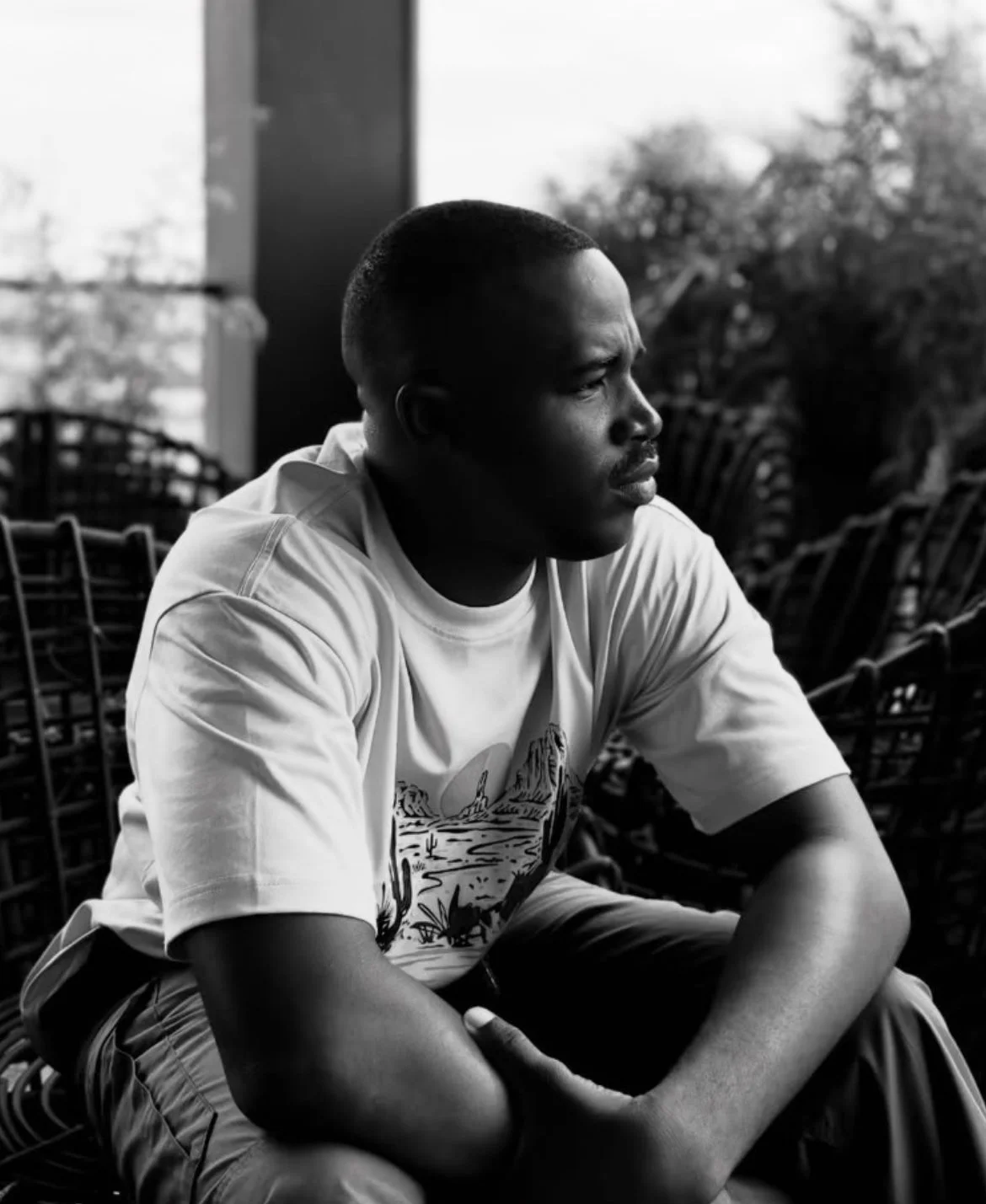
Photograph of Leslie Larte Lartey
There are photographers, dear reader, who set out in the morning armed with a shot list, a mood board, and the grim determination of a man hunting rent money, and there are photographers who merely wander into the middle of existence and, by some alchemy nobody has ever satisfactorily explained, come away with the truth of a whole city folded into a single frame. Leslie Larte Lartey belongs — for now, at any rate, since a man’s convictions are as changeable as Accra traffic at rush hour — firmly to the second and infinitely rarer category. His photographs do not so much ask Accra’s permission as they simply arrive, uninvited but never unwelcome, at the exact moment life was busy happening to somebody who had not thought to compose their face for the occasion. And it is precisely this refusal to stage-manage reality that gives his work the crackling, unrehearsed electricity of a lorry park at dawn.
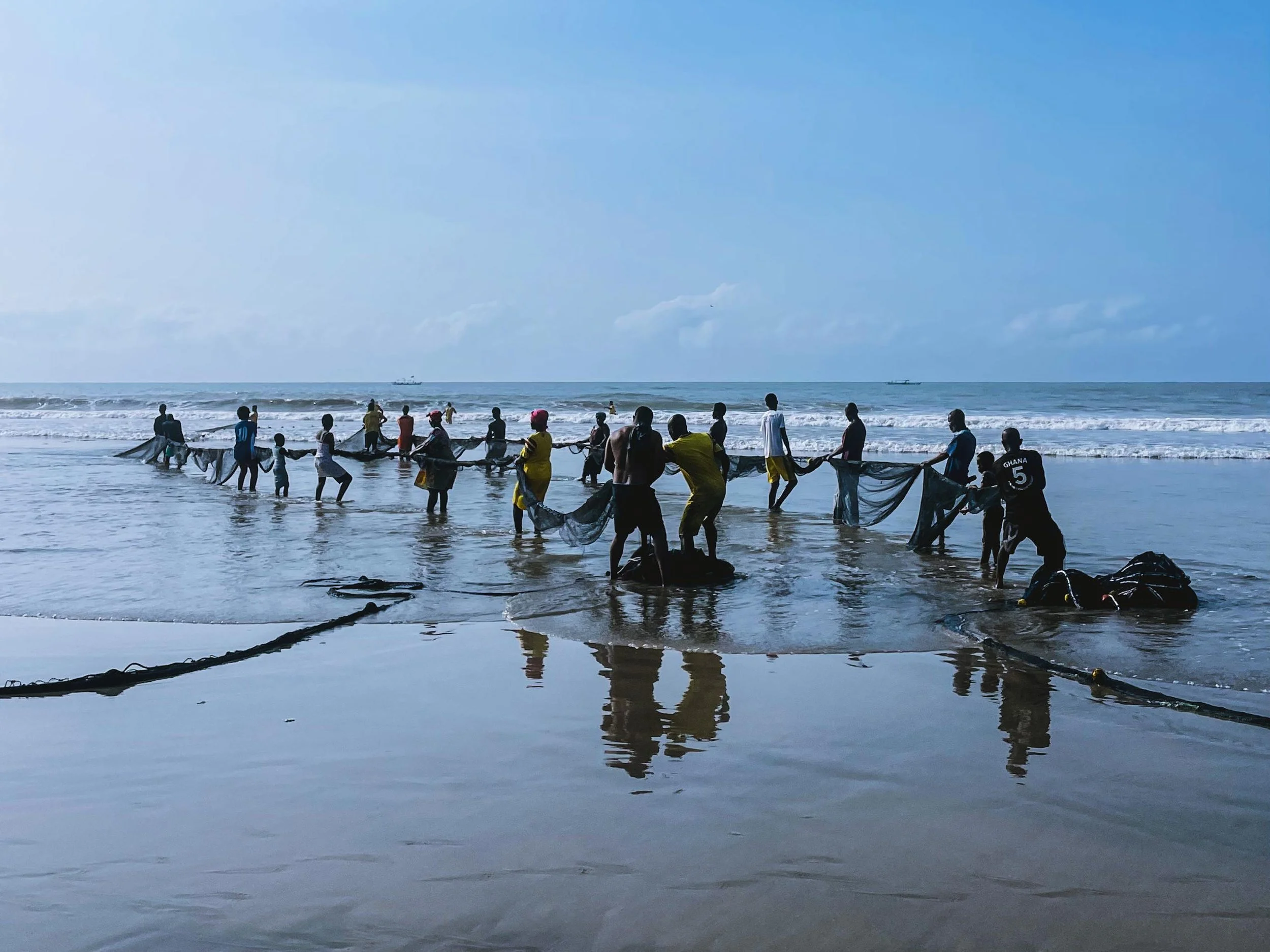
Photograph by Leslie Larte Lartey
This, one suspects, is why True to Country, his exhibition at Ka xoxowo Salon in January, drew a crowd considerably more eclectic than the usual gathering of art-school acquaintances nodding solemnly at one another’s captions. Acclaimed architects turned up. Professionals of a certain seniority turned up, men and women who had built careers and families long before Leslie had picked up a camera. People, in short, who owed him no particular loyalty and had no obligation whatsoever to spend a Saturday evening examining photographs of Jamestown — and yet there they were, examining photographs of Jamestown.
Some of these visitors, Leslie tells me with the mild bewilderment of a man still working out his own gravitational pull, were nowhere near his usual orbit. Yet Ka xoxowo, somehow, reeled them in anyway, the way a well-placed drum reels in a whole street.
That quiet magnetism was, in its own understated fashion, the real achievement of the evening.
Looking at Accra
I put it to Leslie: what is it actually like, exhibiting in the flesh, after years of images living only inside the cold rectangle of a phone screen? He considers the question the way an engineer considers a stress fracture — carefully, and without hurry — before conceding that there is, in fact, a considerable gulf between a photograph glowing on a timeline and a photograph hanging still and silent on a wall, being studied by a stranger who has stopped, perhaps for longer than either of them expected, wearing the particular expression of someone who has just recognised their own street, their own mother, their own childhood, staring back at them from somebody else’s frame.
The exhibition was curated by Kwadwo Abrokwa, a friend of whom Leslie speaks with a warmth that borders on the filial. Kwadwo, in Leslie’s telling, occupies that rare and precious office found only in the truest of creative circles: the friend who spots the thing inside your work before you yourself have summoned the courage to call it by its name. Leslie’s gratitude is accordingly not the polite, ceremonial sort dispensed at award podiums; it is the gratitude owed to someone who gave more to the enterprise than a signature on a poster.
And then, behind and beneath and around all of it, there is Accra herself.
Leslie would roam Jamestown for no reason more elaborate than the simple hunger to see actual life happening. No grand brief. No looming deadline. Just the ancient, almost forgotten discipline of walking through a place with your eyes properly open — a discipline that, in an age when Instagram, TikTok and Google Maps have conspired to convince us we have already seen everything worth seeing, has become quietly, almost defiantly, radical. This, for Leslie, is where photography properly begins: not behind the lens, but on the balls of one’s feet, walking.
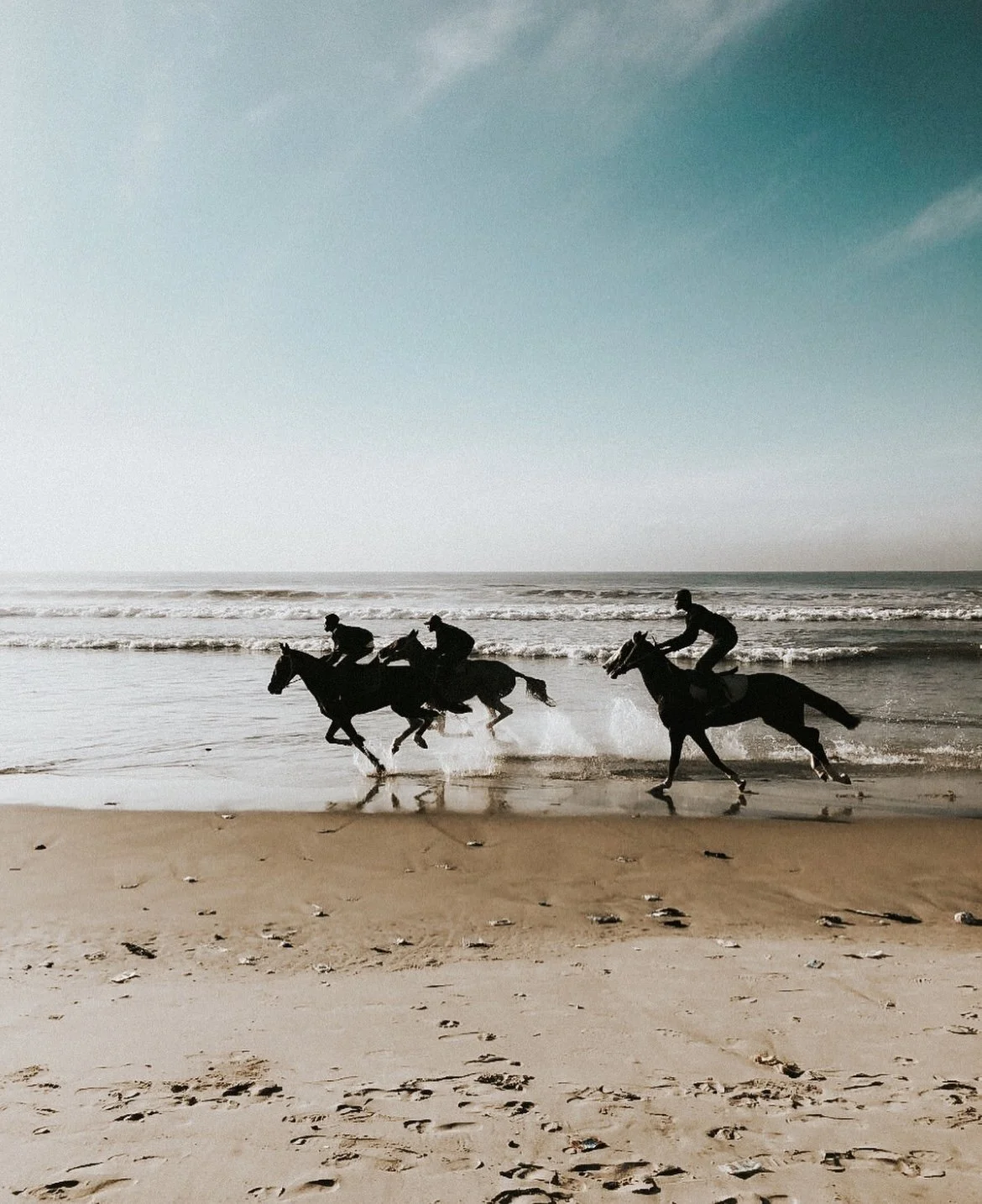
Photograph by Leslie Larte Lartey
The Argument About Photography
We turn to the old and unresolved question of whether photography ought to be curated like a garden or left to grow wild like the bush behind Aburi. He mentions, almost in passing, that he has had this very argument with a friend — a small disagreement on its face, yet one that reaches down into photography’s oldest and most stubborn root: should the photographer arrange the world, or merely have the discipline to notice it as it already is?
Leslie sits, without apology, in the second camp. He prizes the unscripted gesture, the expression nobody rehearsed, the man selling groundnuts who had no idea he was about to become art. Yet he is no zealot about it; he does not imagine his present conviction is carved into the rock at Adomi Bridge, immovable forever. A craftsman grows, he tells me, and what he rejects at twenty may well become his most trusted instrument at thirty — yesterday’s certainty has an unfortunate habit of curdling into tomorrow’s open question.
For the present moment, however, Leslie wants his camera to keep hold of its capacity for surprise.
The Engineer Behind the Camera
Here is the delightful, almost mischievous twist in Leslie Larte Lartey’s story: photography is not, strictly speaking, what his certificates say he ought to be doing at all. He trained as a Mechanical Engineer at KNUST, studying at a distance, and today works, more specifically, as an aircraft engineer, having done work for outfits including PassionAir. There is something rather wonderful in that juxtaposition, and I do not think Leslie himself is entirely unaware of it. Aircraft engineering demands precision to the last rivet; photography, at least as Leslie presently practises it, demands the opposite virtue of instinct — one discipline insists that a machine obey exact tolerances, while the other insists that a human being recognise, in a fraction of a heartbeat, the one moment worth keeping forever.
Perhaps the two disciplines are not such strangers to one another after all. Both demand patient observation. Both punish the careless. And both, in their separate ways, are ultimately concerned with movement — the engineer coaxing a machine safely into the sky, the photographer understanding that the decisive moment will vanish long before a slower hand has managed to lift the camera.
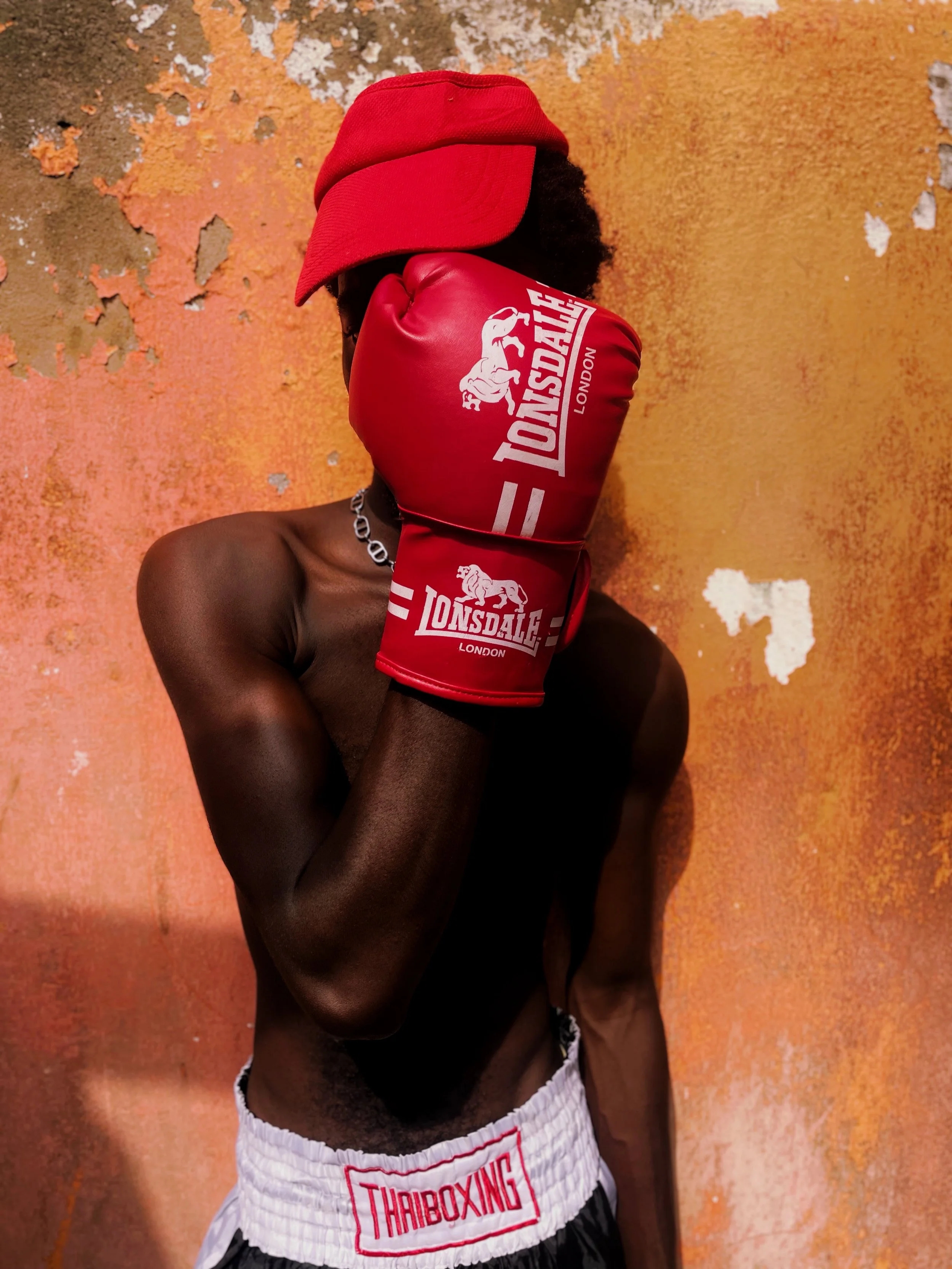
Photograph by Leslie Larte Lartey
Accra, Before Everything Became Content
Leslie was born in Accra; his mother hails from Takoradi. He was raised in Labadi — not the sprawling city of film studios across the ocean, but the Accra neighbourhood whose particular texture is understood far better by those who actually grew up dodging gutters there than by any official description could manage.
He remembers it, above all, as a genuine community, where every family seemed to know every other family, where a child belonged not merely to his own parents but to the whole compound of aunties and neighbours keeping watch. An aunt could check you. A neighbour could check you. Somebody else’s mother could scold you soundly in the street and have the full report delivered to your own mother before you had even managed to compose a defence — a form of social architecture, Leslie suggests, that Accra has been steadily, almost imperceptibly, losing.
As he puts it himself: growing up in Labadi meant being part of something genuinely collective, where every family looked out for every other family’s child, and where accountability did not begin and end at your own front gate.
There is, perhaps, a small clue here to the photographer Leslie eventually became. A boy raised to see his neighbourhood as a shared inheritance does not easily unlearn the habit of watching the people who move through it.
Accra Academy and the Discipline of Attention
Leslie attended Accra Academy, starting as a day student before becoming a boarder in his final year so that he might concentrate fully on his books. It is a modest biographical detail, and yet it tells us something quietly important: the photographer who now champions spontaneity did not simply stumble into professional life without first submitting to discipline. Beneath all that wandering through Jamestown lies an education built, brick by brick, on focus.
Here, too, perhaps, is where engineer and photographer finally shake hands. One discipline demands concentration to pass an examination; the other demands concentration to seize a fleeting moment before it slips away for good. Neither has much patience for a wandering mind.
Ghanaian Gold
At one point in our conversation, the room seems, quite suddenly, to fill up with Ghanaian gold — not the literal metal, though in Accra one learns never to rule anything out entirely, but the gold of memory, of sound, of colour, of place: the small cultural fragments that, laid side by side, add up to something grander than mere nostalgia.
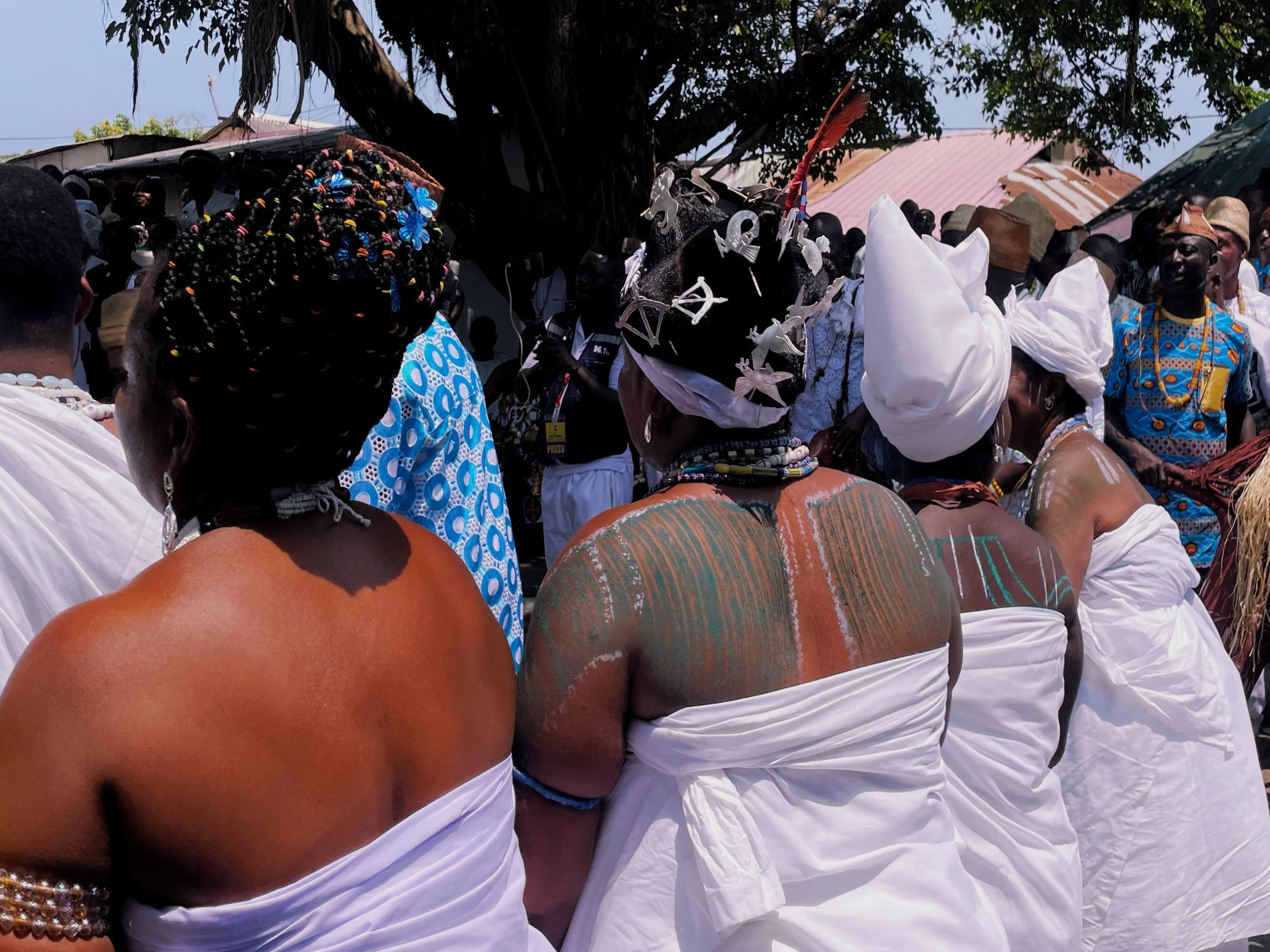
Leslie’s artistic instinct seems to live comfortably in that very territory. He is not in the business of manufacturing an idealised Ghana for export, nor of turning ordinary life into glossy material for a tourist brochure. His interest runs closer to the bone than that: this is what Ghana looks like when nobody is performing Ghana for a visiting camera crew; this is Accra with her guard down.
Forest Hills Drive
A further detail rounds Leslie out rather nicely as a human being rather than a mere subject for a profile: during his university years, he kept J. Cole’s Forest Hills Drive in near-constant rotation — an entirely fitting soundtrack for a young man whose creative sensibility seems to have been shaped as much by quiet observation as by any formal classroom instruction. There is an inwardness running through that record, a young man looking backward, forward and occasionally sideways, trying to make sense of the ground that raised him.
Leslie’s own ground is Accra: Jamestown, Labadi, the ordinary streets, the people met without appointment, the communities of childhood, and Takoradi too, carried forward through his mother’s line. Photography, understood this way, becomes not merely the making of pictures but an ongoing, unbroken conversation with place itself.
The Fatigue of Creating
There remains, however, one thoroughly practical difficulty in all of this: a man gets tired. Leslie admits it plainly. Exhibitions cannot simply be conjured every other weekend like jollof for a Sunday gathering — the selecting, the printing, the curating, the people, the logistics, and the sheer emotional expenditure of it all eventually take their toll, and so one cannot, and indeed should not, attempt it too often.
That admission is refreshing in an age when the creative world seems gripped by a peculiar fever of perpetual visibility, in which everyone must apparently be posting, launching, collaborating and re-announcing without rest. Leslie appears rather uninterested in boarding that particular train, and it is perhaps precisely because he refuses to board it that his work retains room to breathe.
Photograph by Leslie Larte Lartey
True to Country
When Leslie announced his part in True to Country, his statement was disarmingly simple: an opportunity, he said, to honour place, people and perspective, and he expressed real gratitude at standing alongside creatives telling honest, rooted stories.
That sentiment deserves a moment’s proper reflection. To be true to country need not mean waving a flag and shouting about it on a podium; it may mean nothing grander than paying sufficient attention to the place that shaped you — documenting it, questioning it, and refusing to drift entirely from where you began. That, in the end, was the quiet proposition sitting at the heart of True to Country, and it likely explains why the exhibition pulled in visitors from well outside Leslie’s usual circle: acclaimed architects walked in and recognised something of themselves; older generations found a fragment of the Accra they once knew; younger visitors saw a city they thought they already understood, seen suddenly with fresh and more careful eyes. The photographs, in that sense, became less an exhibition than a meeting place.
The Road Ahead
Leslie is, by his own account and by every appearance, still developing — and that, more than anything else, is the point worth holding onto. He does not speak as a man who has arrived at some final, unshakeable theory of photography; he has preferences, certainly, and instincts he trusts for now, but he understands, with a maturity beyond his years, that no serious creative mistakes an early conviction for a permanent constitution. The craft changes. The eye changes. The city changes. And, inevitably, so does the man standing behind the camera.
For the moment, then, Leslie Larte Lartey remains what he is: an aircraft engineer who photographs Accra; a KNUST-trained mechanical engineer with an unmistakable instinct for unscripted life; a son of Accra with Takoradi folded into his maternal inheritance; a former Accra Academy boarder who learned discipline first and discovered the freedom of the camera only afterward. It is, by any measure, an unlikely combination of callings — but then the most interesting people rarely arrive pre-sorted into the neat categories the rest of us have prepared for them.
Perhaps Leslie’s greatest contribution, at this particular stage of his life, is simply to keep looking: to walk through Jamestown, to notice, to photograph, and to let Accra, in her own good time, reveal herself.