
King Ayisoba and the confidence to be ourselves
V. L. K. Djokoto
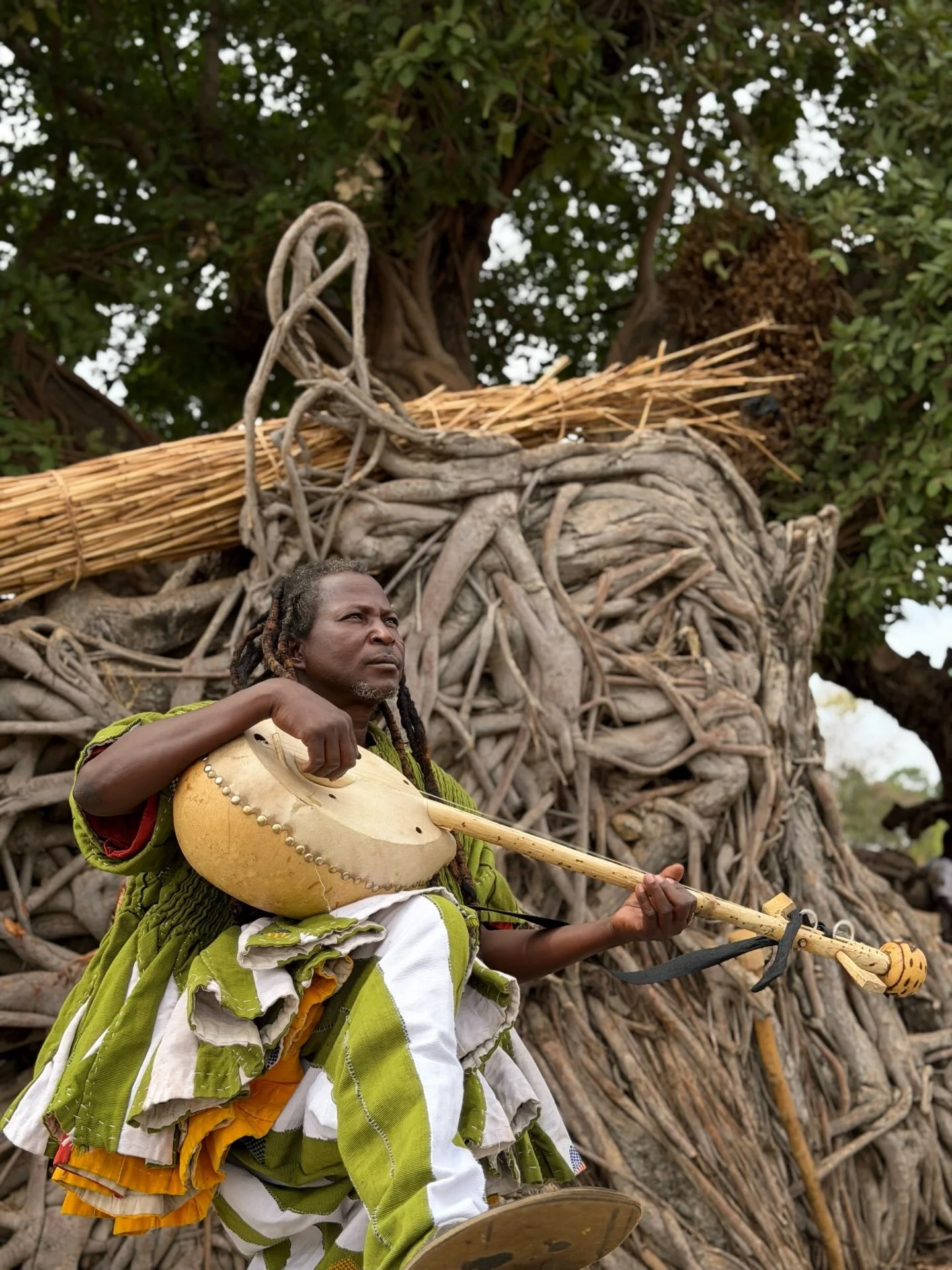
There is something deeply reassuring about King Ayisoba. At a time when popular culture moves at extraordinary speed, when musicians are under constant pressure to follow the latest sound and when success is increasingly measured by streams, trends and international recognition, he has remained remarkably certain about who he is. The clothes, the language, the voice and, above all, the kologo have travelled with him.
That matters, because the story of modern Ghana has always contained a quiet argument about what we keep and what we leave behind. For many people, particularly those who have moved from smaller towns and villages into Accra, modern life has required a degree of adjustment: a different way of speaking, a different way of dressing and sometimes a different way of thinking about home. None of this is necessarily wrong, and societies cannot develop without changing, but there is a danger when change begins to resemble embarrassment.
King Ayisoba offers a different proposition. Born Albert Apoozore in the Upper East Region, he came into national life carrying an instrument which many Ghanaians outside the north had scarcely encountered, singing in languages which much of the country could not understand and presenting himself without any obvious attempt to become more acceptable to Accra. Then I Want to See You My Father became one of the most recognisable Ghanaian songs of its period, and suddenly the sound of the kologo was no longer confined to the part of the country from which it came.
It was a remarkable cultural moment, although we did not necessarily describe it as such at the time. A musician from northern Ghana had produced a national hit without disguising the very things which made him different, and the public had responded not despite those differences but, in part, because of them. He had not travelled to the centre by becoming more like the centre; he had persuaded the centre to come towards him.
This is why King Ayisoba deserves to be considered as something more than an entertaining musician with an unusual instrument. His career raises a larger question about Ghanaian culture and about the confidence with which we carry it into the modern world. Can we become more modern without becoming less ourselves?
The answer should be yes.
The kologo is a useful place to begin. It is not an imposing instrument, and beside the technological machinery of the modern recording studio it can appear almost impossibly simple: two strings, a resonating body and the hands of the musician. Yet simplicity is not the same thing as poverty, and in Ayisoba's hands those two strings are capable of producing rhythm, tension and an unmistakable musical identity.
There is history in that sound, but there is also movement. Ayisoba has never treated the kologo as an archaeological object which must be protected from contact with the present, and this is one of the most interesting things about his work. He has allowed it to encounter amplification, contemporary production, foreign musicians and audiences far removed from northern Ghana, while keeping the character of the instrument intact.
That is how culture survives. It does not survive because we place it behind glass, photograph it for a textbook and bring it out once a year for a cultural festival. It survives because somebody continues to find it useful.
We sometimes make the mistake in Ghana of treating culture with such respect that we almost suffocate it. We dress children in traditional clothes for school celebrations, organise durbars, speak solemnly about our ancestors and then return to a daily life in which the cultural inheritance we have just celebrated plays remarkably little part. We preserve the appearance of tradition without always creating the conditions in which tradition can continue to produce something new.
King Ayisoba has avoided that trap. He has not preserved the kologo; he has put it to work. He has taken an old instrument into new places and asked it to do new things, which is precisely what generations of Ghanaian musicians have done before him.
Highlife itself emerged from this confidence. Ghanaian musicians encountered foreign instruments, maritime cultures, military brass bands, guitars and ballroom forms, but they did not simply reproduce European music in West Africa. They absorbed what was useful, changed it and eventually produced something which belonged unmistakably to us.
That distinction remains important today. Cultural confidence does not mean closing the door to the world, and there would be something rather absurd about attempting to construct a Ghanaian culture purified of every foreign influence. Our history has been shaped by movement, trade, migration and exchange, and some of the things we now regard as thoroughly Ghanaian are themselves products of those encounters.
The question is not whether we borrow. The question is whether we remain recognisable after we have borrowed. A confident culture can meet another culture, learn from it and still return home as itself.
Ayisoba has managed this rather well. His music has travelled internationally, he has worked with musicians and producers from very different backgrounds, and the settings in which he performs have moved far beyond those in which he first learnt his craft. Yet when the music begins, there is very little confusion about where its centre of gravity lies.
It lies in Ghana.
More particularly, it lies in a part of Ghana which our national cultural imagination has too often treated as peripheral. This is where the story becomes larger than one musician, because the career of King Ayisoba also forces us to confront an uncomfortable fact: Accra has acquired too much power to decide what counts as national culture.
This is partly inevitable. Accra has the large media houses, advertising agencies, galleries, theatres, record companies, government ministries and much of the money which sustains the cultural industries. What succeeds here is therefore more likely to be broadcast nationally, discussed nationally and eventually presented as belonging to the nation.
But there is a subtle consequence. Culture produced in Accra can simply be called Ghanaian, while culture produced elsewhere is frequently introduced with a geographical qualification. There are Ghanaian musicians, and then there are "northern musicians"; there is Ghanaian popular culture, and then there are “traditional forms” belonging to particular regions.
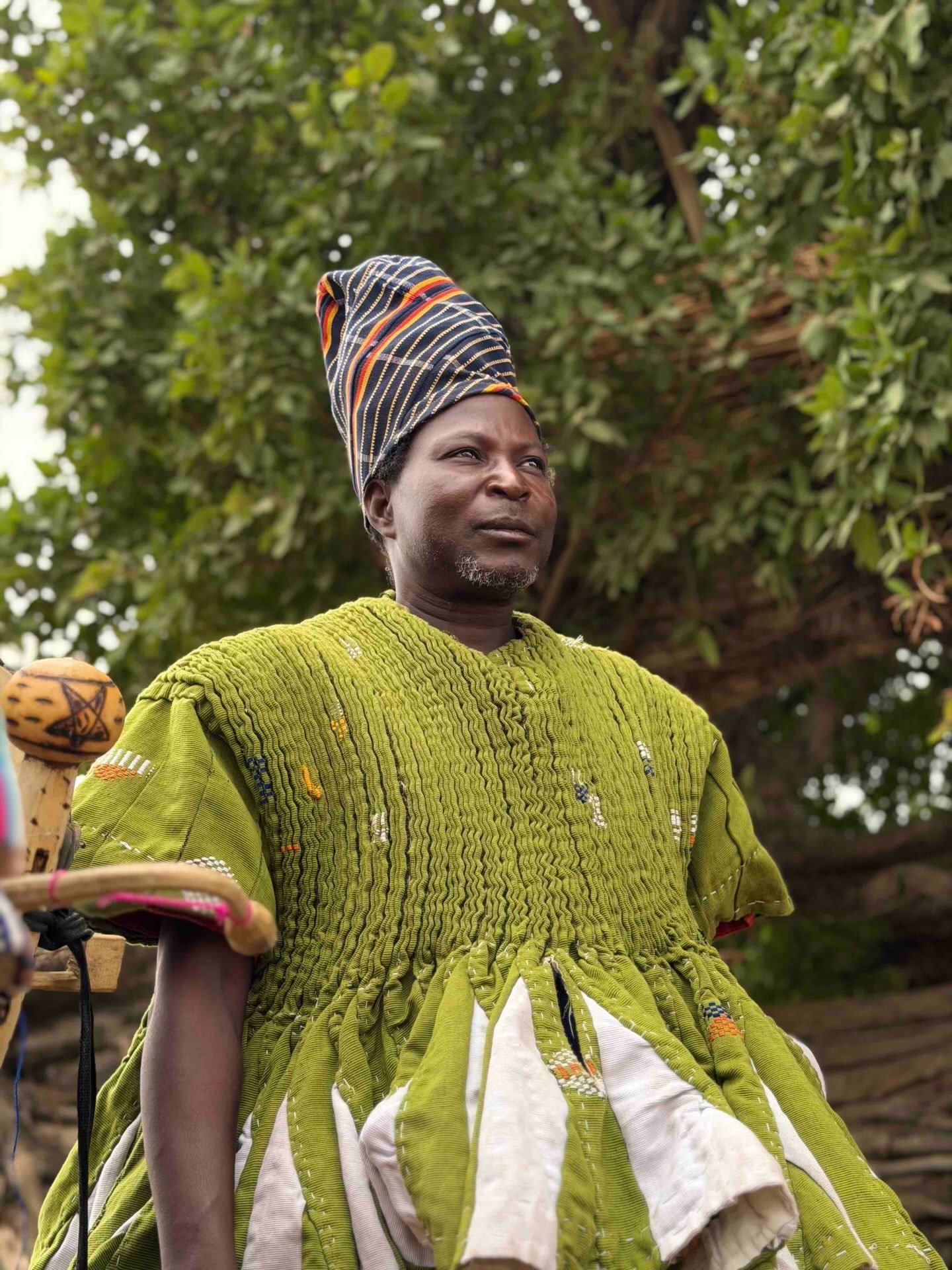
Language can reveal more than we intend.
The north, in particular, has often been presented to the rest of Ghana through a narrow cultural frame. We see smocks, chiefs, compounds, drums, festivals and traditional ceremonies, all of which have their place, but we can forget that northern Ghana is not living in another century. Its young people are negotiating precisely the same modern world as young people in Accra: smartphones, migration, money, fashion, unemployment, ambition, romance, religion and the endless influence of the internet.
There is therefore nothing contradictory about a traditional instrument becoming an instrument of modern Ghanaian music. The kologo does not belong exclusively to the past simply because generations before us played it. If a Ghanaian musician picks it up this morning and makes something new with it, then it belongs to the present.
This is one of the most useful lessons in King Ayisoba's career. Tradition is not simply what our ancestors did; it is what we choose to carry forward from what our ancestors did. Every generation makes that choice, whether consciously or otherwise, and every generation alters the inheritance in the process.
There should be no shame in that alteration. Indeed, the greater danger is the belief that authenticity requires culture to remain frozen at some imaginary point before modernity arrived. Our ancestors themselves borrowed, experimented and adapted, and it would be a strange tribute to them if we concluded that the one thing our generation was forbidden to inherit was their capacity for invention.
This is why cultural preservation, although important, is not enough. Ghana does not merely need museums containing old instruments; we need young people who want to play them. We do not merely need dictionaries recording Ghanaian languages; we need children who can speak them, writers who can write in them and musicians who consider them worthy of song.
The distinction is between heritage and culture. Heritage tells us what has been handed down. Culture decides what we are going to do with it.
And this is where Ayisoba's achievement becomes particularly significant. He has taken something which could easily have been classified as regional heritage and made it part of contemporary popular culture. He has done more for the visibility of the kologo by playing it, touring with it and making records with it than any number of official speeches about preserving Ghanaian traditions could have achieved.
There is also a wider lesson here for Ghanaian artists. International success is often imagined as a process of becoming understandable to somebody else, and there is a temptation to remove whatever might appear too local, too difficult or too unfamiliar. The name changes, the language changes, the production changes and, before long, the artist is competing with thousands of others making roughly the same sound.
But the world does not necessarily require that from us. Ghanaians have listened happily to music in French, Spanish, Lingala and languages we cannot identify, because music has never depended entirely upon literal understanding. Rhythm communicates, performance communicates and conviction communicates.
Sometimes what travels furthest is precisely what begins somewhere very particular.
King Ayisoba understood this long before cultural commentators began speaking endlessly about authenticity and global African music. He did not make the kologo less Ghanaian in order to make it international; he made its Ghanaian character part of what international audiences were being invited to encounter. There is a considerable difference between the two approaches.
It is also a question of dignity. One of the more persistent consequences of colonialism was not simply political or economic but cultural: the creation of hierarchies in which certain languages, clothes, instruments and forms of knowledge acquired greater prestige than others. Political independence could be declared on a particular day, but cultural confidence takes much longer to recover.
We can still see the remnants of those hierarchies around us. There are Ghanaian parents who worry that speaking a local language to their children may somehow obstruct their English, formal environments in which European dress remains the unconscious measure of seriousness, and educated people who know considerably more about distant cultures than about communities a few hundred miles from their homes. None of this means that English, suits or foreign culture are undesirable; it simply means that confidence should not require the rejection of one inheritance in order to acquire another.
A healthy Ghana should be capable of holding both.
That is perhaps what is most attractive about Ayisoba. There is no visible anxiety in his presentation of himself, no suggestion that the kologo requires an apology before it can enter a modern room, and no apparent embarrassment that his music comes from somewhere specific. He seems to understand that you can travel a very long way without first having to erase the place from which you started.
Ghana needs more of that confidence.
We are living through another period of extraordinary cultural change. Afrobeats has given African popular music a global audience on a scale that would have seemed improbable a generation ago, digital platforms have demolished many of the old barriers to distribution, and a young Ghanaian musician can now make a record in a bedroom in Accra and find listeners in London, Lagos or New York before the week is over.
These are enormous opportunities, but opportunities also bring temptations. When an international formula appears to work, everybody understandably wants some part of it, and the result can be a strange uniformity in which artists from very different places begin sounding increasingly alike. Ghana should participate confidently in the new African cultural marketplace, but we should not become merely another supplier of generic material to it.
Our competitive advantage, if one wishes to put it in those terms, is ourselves.
There are sounds in Bolgatanga, Wa, Ho, Keta, Tamale, Cape Coast, Kumasi and countless communities between them which cannot be manufactured in Los Angeles or London. There are rhythms, languages, stories and instruments which belong to particular Ghanaian experiences, and their value does not diminish because they are local. On the contrary, their locality may be precisely what gives them something distinctive to say to the world.
King Ayisoba is proof of the point.
Ghana is an extraordinarily musical country, and yet there are parts of our own musical inheritance which many of us scarcely hear. We can identify American rappers from their first four bars, follow Nigerian popular music with admirable attention and sing songs in languages we do not speak, while remaining strangers to some of the sounds produced within our own borders. The answer is not to become less interested in the world; it is to become equally curious about ourselves.
For all the changes in Ghanaian popular music over the past two decades, Ayisoba and his kologo remain. Genres have risen, dominated and faded; technology has changed; audiences have moved from CDs to downloads to streaming and social media. Through all of this, two strings have continued to make themselves heard.
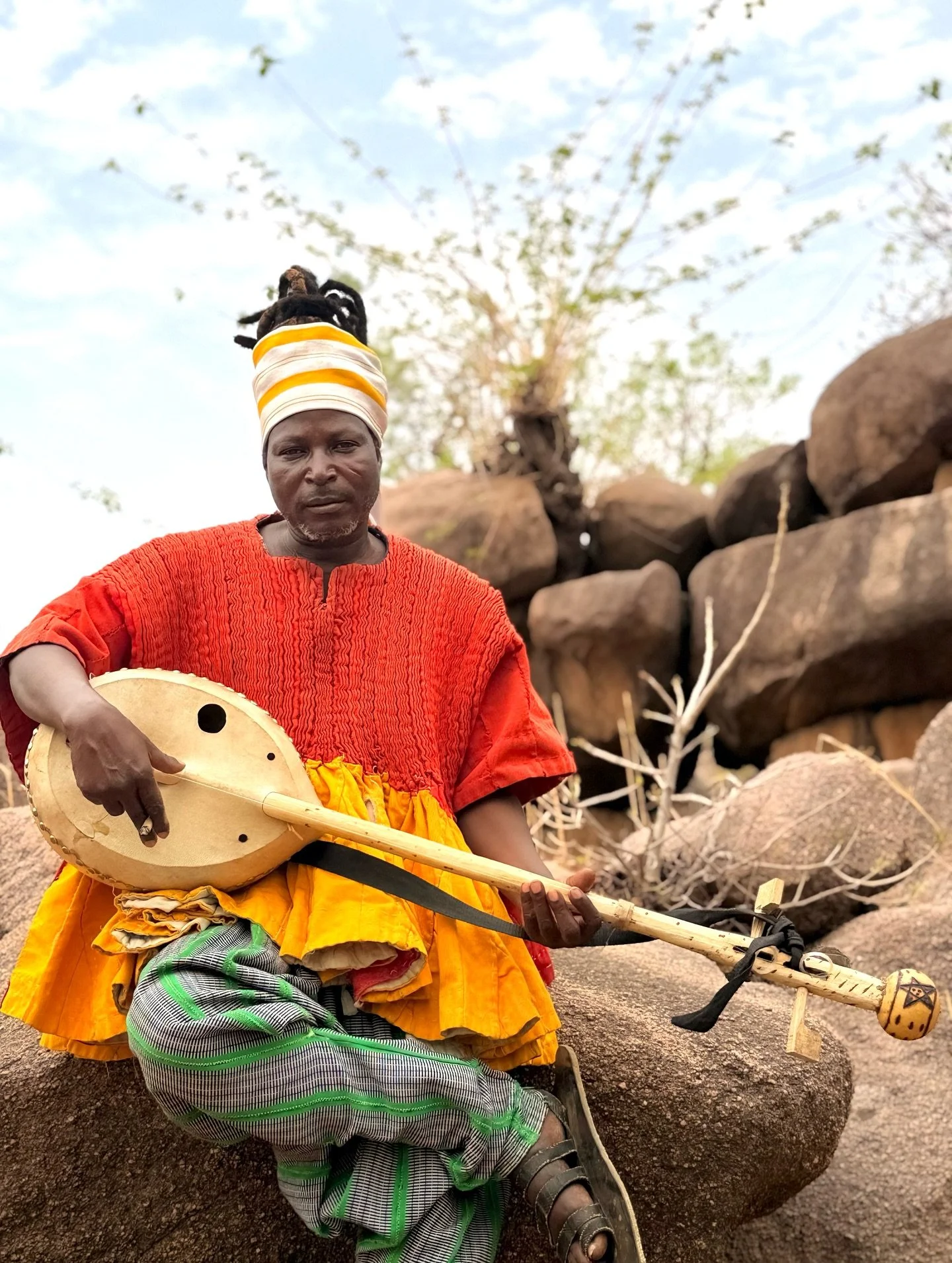
There is something rather magnificent about that persistence.
King Ayisoba represents a Ghanaian modernity which does not require amnesia. His career tells us that an old instrument can enter a new studio, that a regional language can occupy a national stage and that a musician can travel across continents without becoming culturally weightless. It reminds us, above all, that progress and inheritance are not enemies.
We should stop behaving as though the choice before Ghana is between tradition and modernity. The countries which possess the greatest cultural confidence do not make that choice; they take what they inherit, argue with it, alter it and carry the best of it forward. Ghana should do the same.
Sometimes the future will arrive through artificial intelligence, new buildings and gleaming technology. Sometimes it will arrive through a new generation determined to do things differently. And sometimes, if we have the confidence to recognise it, the future will arrive through an old instrument with two strings, carried by a man who never thought he had to become somebody else before the world would listen.
That is why King Ayisoba matters.