
By V. L. K. Djokoto
Every nation keeps a few institutions in which it quietly stores its sense of self. In Ghana, the Black Stars are one of them. The Ghana Football Association (GFA), which governs the game, is therefore more than an administrative institution. It is a custodian of national aspiration, public emotion and a sporting heritage that belongs to generations of Ghanaians.
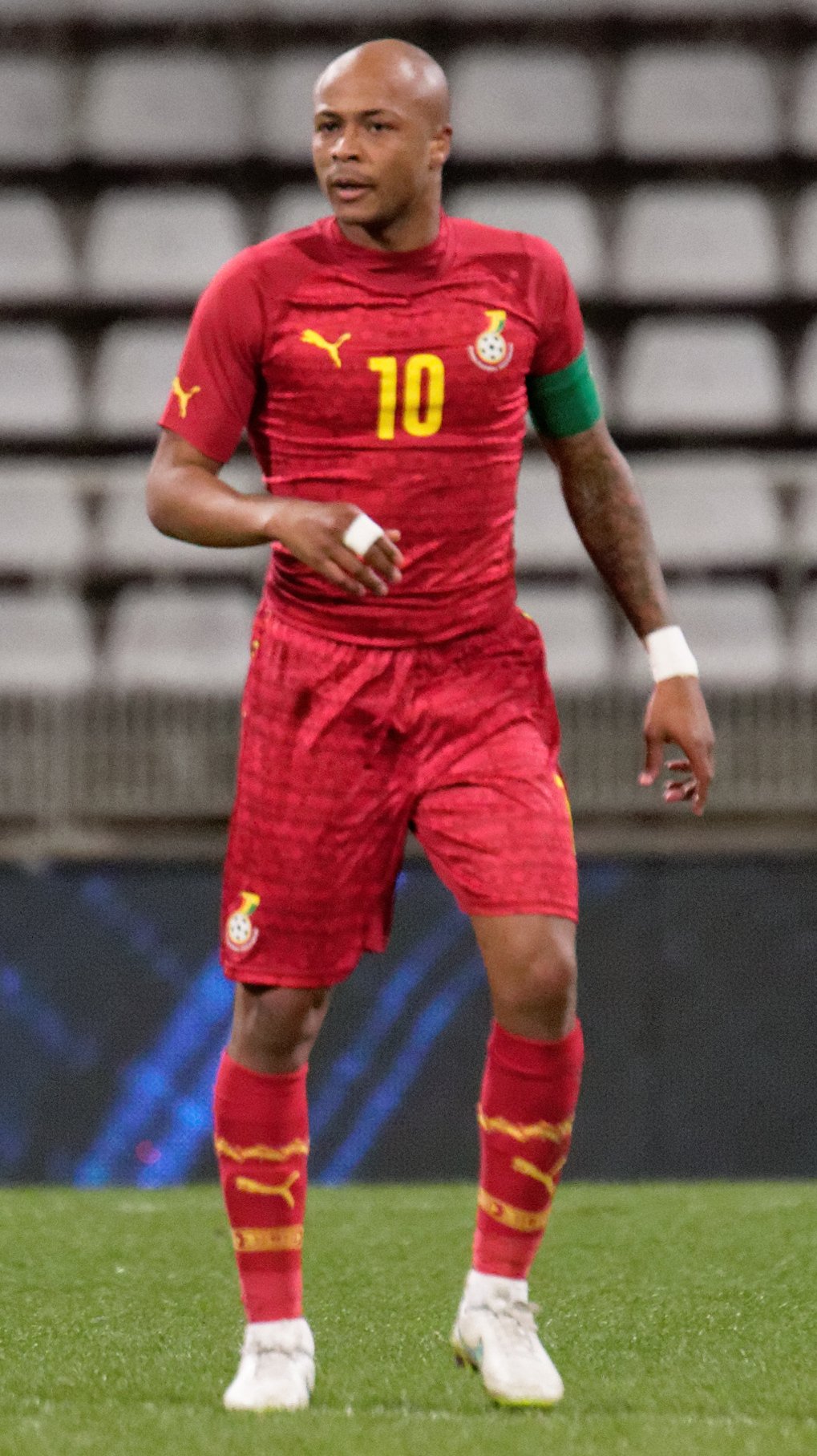
The question of who leads such an institution deserves to be considered carefully. As Ghana approaches another GFA presidential election in 2027, the conversation about leadership has increasingly turned towards one familiar figure: André Dede Ayew. His possible entry into football administration presents an interesting question about experience, representation, institutional reform and the future of Ghanaian football.
I shall argue the matter in the manner of a brief. First, the issue; then the principle; then the application; and finally, the conclusion.
The Issue: Who Should Lead Ghana Football?
The GFA presidency is one of the most consequential positions in Ghanaian sport. Its occupant must understand the game, appreciate its commercial possibilities, command the confidence of its stakeholders and provide the institutional direction necessary for its development.
The incumbent, Kurt Okraku, was elected in 2019 and secured a second term in 2023. A subsequent amendment to the GFA statutes allows the president to serve up to three terms. Okraku has not ruled out seeking another mandate, although he has indicated that he will address the question when the time comes.
Against this background, the possibility of André Ayew entering the contest has generated considerable discussion. Ayew has acknowledged receiving calls from football stakeholders encouraging him to consider the position, although he has not formally declared his intention to contest.
The question, therefore, is not whether a famous footballer should automatically become an administrator. It is whether a man who has spent much of his professional life at the centre of Ghanaian football could bring valuable experience and a different perspective to its administration.
The Principle: Football Must Be Governed With an Understanding of Football
There is an important distinction between administering a sport and understanding the people whose livelihoods depend on it. Both are necessary, but they are not interchangeable.
Football administration requires knowledge of finance, law, commercial negotiations, institutional management and international relations. However, it also requires an intimate appreciation of the footballer’s experience, the pressures of international competition, the development of young talent and the relationship between clubs, players and national teams.
This is where Ayew’s background becomes relevant.
A former captain of the Black Stars understands the responsibilities that accompany national representation. He has experienced the expectations of supporters, the pressures of major tournaments and the difficult relationship between individual careers and collective ambition.
Such experience does not automatically confer administrative expertise. It does, however, provide a perspective that should be properly represented in the governance of the game.
The Application: The Case for André Ayew
First, there is the question of experience.
Ayew’s footballing career has taken him through several European leagues and some of the most demanding environments in professional football. He has represented Ghana at major international tournaments, captained the national team and participated in the 2022 FIFA World Cup in Qatar.
He was also part of Ghana’s historic 2009 FIFA U-20 World Cup-winning generation. That achievement remains significant because it demonstrated the capacity of Ghanaian football to develop young players capable of competing successfully at the highest international level.
His career offers an understanding of football from the grassroots development pathway to elite professional competition. This is a valuable starting point for any conversation about the future of the GFA.
Second, there is the question of representation.
For too long, discussions about football governance have largely taken place between administrators, club executives, journalists and other institutional stakeholders. The players, whose performances sustain the commercial and emotional value of the sport, must also have a meaningful voice in determining its direction.
A former Black Stars captain entering football administration would bring the experiences of the dressing room into the boardroom. He would understand that behind every football contract is a young person, often with a family depending on his earnings and a career that may last only a relatively short time.
This is particularly relevant to Ayew’s recent comments about financial education for young footballers. Speaking on the Obi One Podcast, he raised concerns about the people entrusted with managing the finances of young players and called for greater education in this area.
It is an important conversation. Ghana must develop a football economy in which young players understand contracts, investments, taxation, savings and the responsibilities that accompany professional earnings.
A football association should not concern itself only with the performance of players on the pitch. It should also take an interest in their welfare, professional development and financial security.
Third, there is the question of international relationships.
Modern football is an international business. Its development depends on relationships with FIFA, CAF, international clubs, sponsors, investors, broadcasters and other football associations.
Ayew’s years in European football have exposed him to professional structures and sporting cultures beyond Ghana. His international relationships could provide useful opportunities for dialogue, partnerships and knowledge exchange.
This is not to suggest that personal relationships can replace institutional competence. Rather, they can complement a properly constituted administrative team and a clearly defined development strategy.
Ghanaian football must become more deliberate about establishing international partnerships that produce tangible benefits for local clubs, academies, coaches and players.
Fourth, there is the question of institutional renewal.
The 2027 election provides an opportunity for the football community to examine the direction of the GFA and the institutional arrangements through which the game is governed.
Leadership renewal should not be confused with hostility towards existing administrators. Nor should continuity be treated as an automatic virtue. Institutions become stronger when their leadership is subjected to genuine competition, constructive scrutiny and the presentation of alternative ideas.
Former GFA vice-president George Afriyie has publicly encouraged Ayew to consider contesting the presidency, arguing that competition for the position would be beneficial to Ghana football. Broadcaster Kwame Sefa Kayi has also expressed support for Ayew should he decide to run.
Former Nigerian international John Mikel Obi has similarly indicated his willingness to campaign for his former teammate.
These interventions demonstrate that the conversation extends beyond Ayew’s immediate footballing circle. They also reflect a wider debate about the kind of leadership Ghanaian football requires.
The Work That Must Accompany the Ambition
However, a presidential ambition must be supported by a programme of work.
If Ayew eventually decides to contest, he must present a comprehensive development agenda. Ghana needs more than a change of personality at the top of its football administration. It needs an institutional programme that can be measured against clear objectives.
Such a programme should address at least six areas.
First, grassroots football must receive greater attention. District and regional competitions should become meaningful development platforms, supported by improved facilities, coaching and talent identification.
Second, the Ghana Premier League must become commercially sustainable. Clubs need stronger governance, improved marketing, better matchday experiences and more reliable revenue streams.
Third, the welfare of players must become a central consideration. Contract education, financial literacy, medical support, insurance and post-career development should form part of a comprehensive player welfare framework.
Fourth, women’s football deserves a more deliberate investment strategy. The Black Queens and the domestic women’s game must enjoy the facilities, commercial attention and institutional support necessary for sustained progress.
Fifth, the GFA must strengthen transparency and accountability. Its financial arrangements, procurement processes, development expenditure and institutional decisions should be subject to appropriate oversight.
Finally, the national teams must be supported by a coherent technical development philosophy. Ghana should not approach every tournament as an isolated exercise. It must build a sustainable football culture, from youth development to senior international competition.
These are matters that require competent administrators, technical experts, financial professionals and experienced football people working together.
Ayew’s potential contribution must therefore be considered within the context of the team he assembles and the institutional programme he presents.
The Other Side: Experience Must Become Administration
There is a legitimate argument that playing football at the highest level does not necessarily prepare an individual to administer it. A successful footballer may understand the dressing room without necessarily understanding the complexities of an association’s finances, statutes and commercial obligations.
That distinction must not be dismissed.
If Ayew enters the race, he should demonstrate his understanding of the GFA’s constitutional responsibilities, its financial structure and the relationship between the association and its constituent members. He should also identify the people with whom he intends to work and explain how their expertise will translate into measurable results.
The presidency is not an honorary position. It is an executive responsibility.
The football community must therefore examine every candidate against a clear programme, not merely their reputation or history in the game.
The Conclusion: A Conversation Worth Having
André Dede Ayew represents an important possibility in the continuing conversation about Ghanaian football governance. His playing career, international exposure, experience as Black Stars captain and recent interventions on player welfare provide substantial grounds for examining what he might bring to the administrative side of the game.
There is also a cultural significance to the discussion. Football is one of the few institutions through which Ghana consistently presents itself to the world. Its administration should reflect an understanding of the people, communities and aspirations that give the sport its meaning.
The captaincy was never simply about wearing an armband. It was about representing a collective interest, accepting responsibility and understanding that individual achievement is ultimately measured against the fortunes of the team.
The question now is whether some of those lessons can be translated into institutional leadership.
Should Ayew decide to contest the GFA presidency, he will owe the football community a clear vision, a credible team and a programme capable of transforming Ghanaian football. The electorate, in turn, must give serious consideration to the experience and ideas that every candidate brings to the table.
Ghana football deserves a serious national conversation about its future. And in that conversation, André Dede Ayew’s possible candidature deserves a place.