
Amaarae and the New Ghanaian Imagination
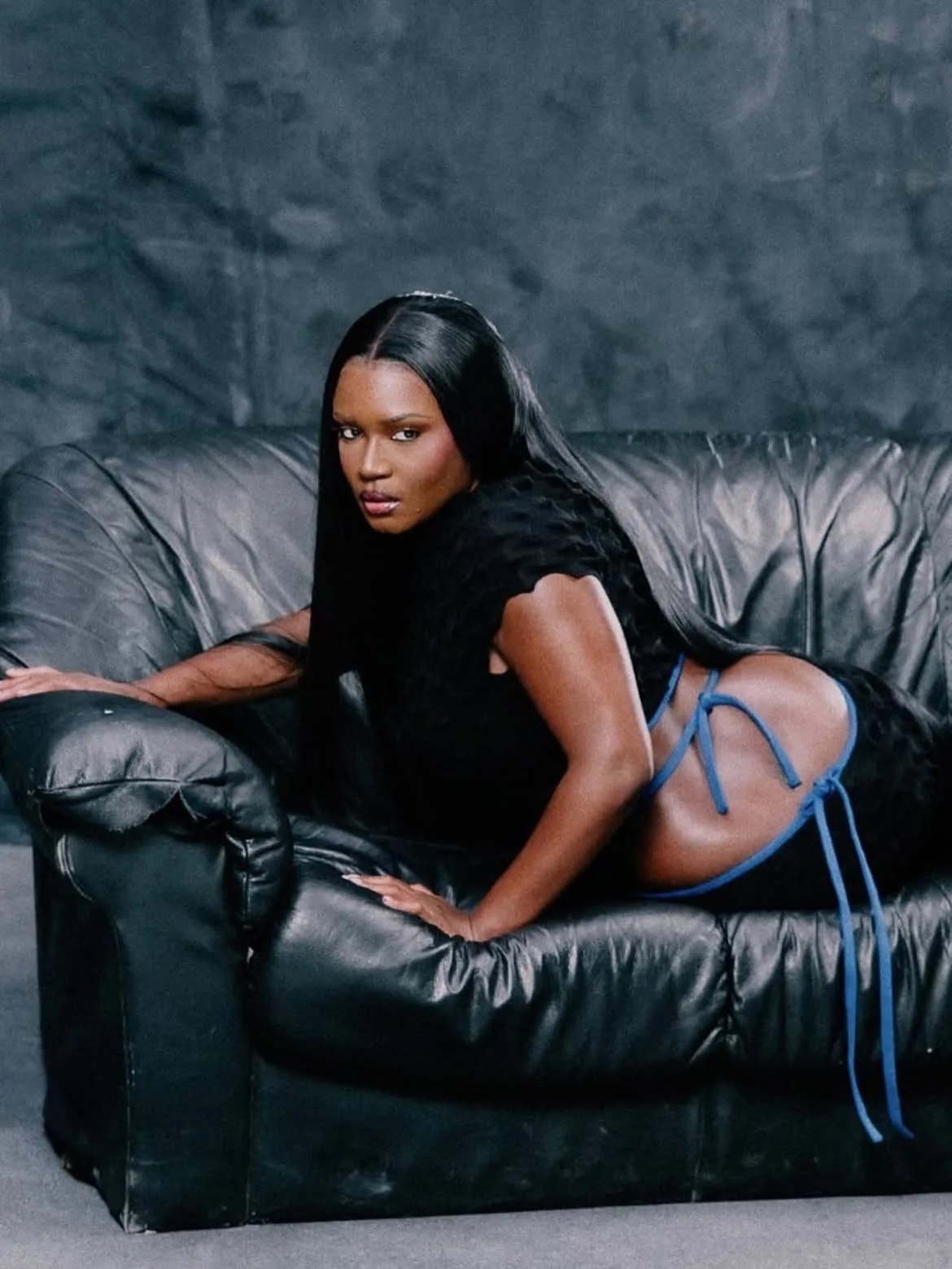
Photograph of Amaarae
V. L. K. Djokoto
There is a temptation, when discussing Amaarae, to begin with her music. This is understandable, but it is also insufficient. Amaarae is interesting not simply because of what she sounds like, but because of what her career tells us about Ghana, its changing culture and the generation now attempting to define itself beyond the old boundaries of nation, respectability and genre.
Born Ama Serwah Genfi, Amaarae belongs to a generation of Ghanaians for whom identity is no longer experienced as a fixed inheritance. She grew up between Ghana and the United States, absorbing different musical and cultural traditions along the way. Her work consequently occupies several worlds at once, moving between Afropop, R&B, electronic music, highlife, dance music and the more difficult-to-name territories that emerge when musicians stop worrying about categories.
This matters because Ghanaian popular culture has historically been rather good at classification. Highlife was recognisably Ghanaian. Hiplife, despite borrowing the architecture of American hip-hop, announced its Ghanaian character through language, rhythm and social reference. Gospel developed its own codes, as did the different traditions of popular dance music that have passed through Accra over the decades.
Amaarae complicates this arrangement.
Her voice itself seems almost designed to resist convention. It is light, high and occasionally fragile, sitting above production that can be remarkably muscular. On The Angel You Don’t Know, released in 2020, that contrast became part of a larger musical language, and “SAD GIRLZ LUV MONEY”, recorded with Moliy and later remixed with Kali Uchis, carried that language into international popular culture.
Yet the significance of Amaarae cannot be measured merely in streams or international recognition. Those are useful measures for the music business, but rather crude ones for cultural analysis. The more interesting achievement is that she has expanded the range of identities through which a Ghanaian artist can enter the world.
For much of the postcolonial period, African cultural production carried an exhausting burden of representation. The African artist abroad was expected, in one way or another, to explain Africa. Authenticity became something almost anthropological: the drums had to sound sufficiently African, the clothes had to look sufficiently African and the artist was frequently expected to perform a recognisable version of Africanness for foreign consumption.
Amaarae refuses this bargain.
She does not abandon Ghanaian identity; rather, she refuses the suggestion that Ghanaian identity must have a predetermined aesthetic. Her Ghana can contain highlife and electronic music, Accra and Los Angeles, African symbolism and global club culture. She represents a Ghanaian identity confident enough to borrow, distort, combine and invent.
That distinction is important. Cosmopolitanism is sometimes treated in African cultural debates as a polite word for Westernisation. But the history of Ghanaian music suggests otherwise. Highlife itself developed through encounters: military brass bands, coastal rhythms, guitars, ballroom music, maritime cultures and the social transformations of the colonial city all contributed to its formation.
Culture has never survived by remaining still.
Amaarae therefore belongs to an older Ghanaian tradition precisely because she appears so new. Like earlier generations of musicians, she takes the materials available to her generation and reorganises them. The difference is that her archive is considerably larger: Accra, Atlanta, London, the internet, hip-hop, punk, R&B, fashion, electronic dance music and Ghanaian popular memory can now exist within the same cultural vocabulary.
Her 2023 album Fountain Baby demonstrated how sophisticated that vocabulary had become. It moved comfortably across musical traditions without sounding like an exercise in fusion for fusion’s sake. The organising principle was not genre but personality: the record sounded coherent because Amaarae herself had become the genre.
This is one of the defining developments in contemporary popular culture. The strongest artists increasingly construct worlds rather than simply records. Music, clothing, photography, typography, performance and social media become parts of a single language, and the artist operates almost as the creative director of an imagined universe.
Amaarae understands this instinctively.
Her fashion is not decoration added after the music has been completed. Neither are her album covers and visual choices incidental to the records. They participate in the same argument about freedom, beauty, gender, desire and self-invention.
There is, inevitably, a politics to this.
Amaarae’s treatment of desire is particularly significant within the African pop tradition. She has herself observed that popular African music has frequently narrated attraction from the perspective of the man pursuing the woman. Her work reverses that gaze, placing female desire, pleasure and agency closer to the centre of the story.
One does not have to agree with every provocation to understand its cultural importance. Societies reveal themselves partly through the people they find difficult to categorise. Amaarae's importance lies partly in her willingness to inhabit that uncertainty rather than resolve it for the comfort of an audience.
This is where her relationship with Ghana becomes particularly interesting. She has spoken openly about the friction that accompanied her early career, when sections of the Ghanaian cultural landscape struggled to understand her music and visual language. By the time of Black Star, released in 2025, she described a changed relationship with home: the difference that once produced suspicion had begun to produce curiosity and affection.
That transition tells us something larger than the story of one musician.
Cultures do not change only because governments introduce policies or universities produce theories. They change because people encounter new possibilities and gradually cease to find them strange. What appears excessive to one generation can become ordinary to the next.
Amaarae has participated in precisely this kind of cultural expansion.
Her 2025 Coachella appearance offered a striking example. She became the first Ghanaian artist to perform a solo set at the festival and deliberately used part of that platform to showcase music from Ghana, including work associated with La Même Gang, the Asakaa movement and Joey B. Here was an artist once considered difficult to locate within Ghanaian popular culture using one of the world’s most visible stages to locate herself emphatically within it.
Then came Black Star.
The title is important. The Black Star belongs to the symbolic vocabulary of the Ghanaian republic, but its meaning travels considerably further: independence, Pan-Africanism, Black internationalism and the unfinished political imagination of the twentieth century all hover around it. Amaarae appropriates that symbol for another generation, not as a museum piece but as something available for reinvention.
This is perhaps the most interesting thing about her present cultural position. She does not appear interested in proving that she is Ghanaian by reproducing familiar images of Ghana. Instead, she proposes that whatever a Ghanaian creates confidently enough can itself enlarge the meaning of Ghana.
That is a far more ambitious proposition.
It should also interest policymakers. Ghana speaks frequently about the creative economy, usually in the language of jobs, tourism, festivals and export revenue. All of these things matter, but a serious cultural policy must understand that the country's greatest competitive advantage will not come from producing more artists who sound like whatever happens to be commercially successful today.
It will come from producing the conditions in which unusual people can survive long enough to become important.
That means stronger intellectual-property institutions, better performance infrastructure, serious arts education, access to finance and a cultural establishment willing to tolerate experimentation. Ghana cannot reasonably declare an ambition to become a creative hub while expecting its artists to remain aesthetically obedient. Innovation is almost always irritating before it becomes profitable.
Amaarae’s career should therefore be studied not simply as a triumph of individual talent, but as an argument for cultural freedom.
Ghana has already given the world highlife. It produced musicians who transformed guitars, horns, rhythms and languages into one of Africa's great modern musical traditions. The question before the present generation is not whether it can faithfully reproduce that inheritance, but whether it possesses the confidence to do what those earlier musicians actually did: experiment.
Amaarae does.
She is Ghanaian without being confined to Ghana, African without performing Africanness for approval, and global without becoming culturally anonymous. There is something profoundly contemporary in that condition. It reflects the reality of a generation whose lives move between countries, screens, sounds and identities with a fluency that older cultural categories cannot always accommodate.
Perhaps that is why Amaarae matters.
The most interesting Ghanaian artists have never merely reflected the country as it is. They have suggested what it might become. Amaarae belongs to that tradition, and the Ghana she presents to the world is restless, cosmopolitan, self-confident and gloriously difficult to put in a box.