
A Strategic Framework for Resolution: Navigating the Korle Bu Laboratory Strike
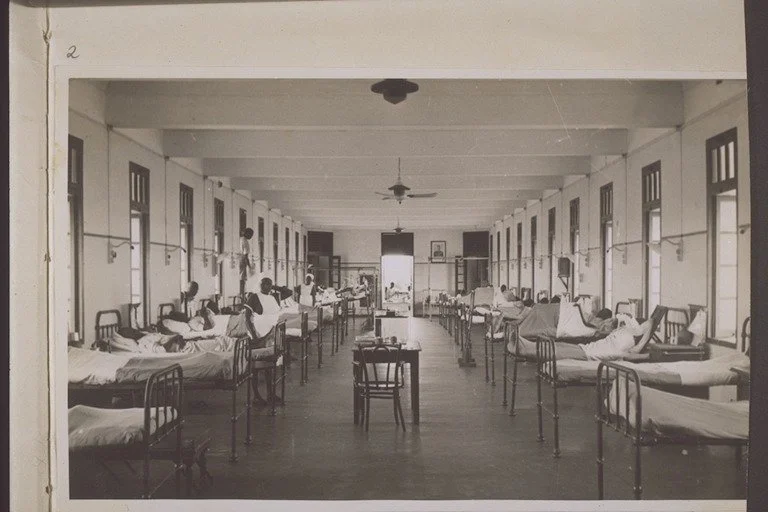
A ward of the Gold Coast Hospital, Accra.
Creator: West African Photographic Service
By V. L. K. Djokoto
The laboratory workers’ strike at Korle Bu presents what might be termed a “limited asymmetric crisis” — one in which the state possesses overwhelming structural power yet finds its options constrained by the very asymmetry of the conflict. The workers control a critical node in the healthcare system whilst lacking broader political leverage; the government commands vast resources yet cannot simply compel medical professionals to work without incurring unacceptable costs. The art lies in resolving the matter swiftly whilst establishing precedents that serve longer-term governance objectives.
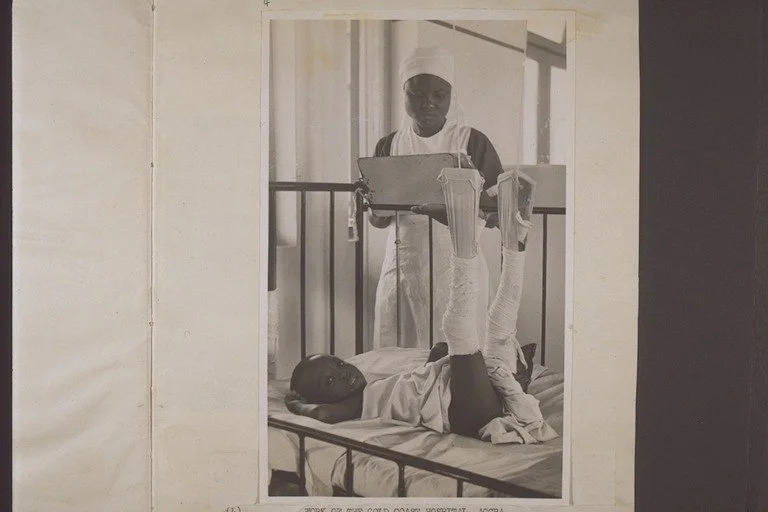
Work of the Gold Coast Hospital, Accra — Child Patient, 1941.
The Strategic Landscape
Three factors define the present situation. First, the strike’s phased implementation suggests tactical sophistication on the workers’ part — they have left themselves room for escalation or retreat. Second, the timing, following a statutory notice served in late January, indicates this is not spontaneous but calculated. Third, the exemption of emergency services in the initial phase reveals the union’s awareness of public opinion constraints.
This creates what one might call a “graduated pressure model”— precisely the sort of industrial action most difficult to counter, as it denies the government a clear crisis moment that would justify decisive intervention.
The Government’s Dilemma
The authorities face competing imperatives. Swift capitulation invites imitation across the public sector, particularly within the fragmented landscape of healthcare professional associations. Yet protracted confrontation risks genuine medical catastrophe, which would be politically devastating and morally indefensible.
Moreover, the government operates under asymmetric visibility: every delayed diagnosis or postponed surgery becomes a human story; the fiscal constraints necessitating caution remain abstract. The workers have effectively weaponised public sympathy.
A Three-Track Approach
The situation demands parallel diplomatic and strategic initiatives:
Track One: Immediate Private Engagement
Within 24 to 48 hours, senior officials — ideally someone with medical credibility rather than a political figure — should initiate confidential discussions with union leadership. The objective is not negotiation but intelligence: understanding the minimum acceptable terms and identifying potential mediators acceptable to both parties.
This engagement must be deniable if it fails but credible if it succeeds. The interlocutor should possess sufficient authority to make provisional commitments without creating the appearance that the government has capitulated to pressure.
Track Two: Controlled Public Messaging
The government must avoid the temptation to delegitimise the strike or question the workers’ patriotism. Such rhetoric invariably backfires, transforming a labour dispute into a broader contest over dignity and respect.
Instead, the public stance should be one of studied concern: acknowledgment of the workers’ contributions, expression of disappointment at the disruption to patient care, and commitment to good-faith dialogue. The message must be: “We hear you, and we are listening,” whilst carefully avoiding any suggestion that concessions are inevitable.
Simultaneously, quiet briefings to selected journalists should emphasise the government’s fiscal constraints and competing demands — not as justification for intransigence, but as context for the difficulty of the choices involved.
Track Three: Structural Resolution with Face-Saving Mechanisms
The resolution must address the workers’ core grievances whilst establishing that industrial action is not the optimal path to redress. This requires creativity.
If the dispute concerns allowances or conditions of service, consider establishing a time-bound technical committee to review compensation across all healthcare cadres. This achieves several objectives: it demonstrates responsiveness, dilutes the appearance of yielding to pressure by broadening the scope, and creates a structured process that discourages future strikes by offering an alternative mechanism.
The committee’s composition is critical — it must include representatives with credibility amongst the workers, technocrats who can justify outcomes on policy grounds, and perhaps an international expert to provide comparative context.
Announce interim measures immediately: even symbolic gestures such as improved laboratory equipment procurement or accelerated resolution of administrative grievances can create goodwill and provide union leadership with something tangible to present to their members.
Managing the Endgame
The resolution must be structured to allow both parties to claim victory. The workers must be able to say they secured meaningful concessions through solidarity; the government must demonstrate that order was restored through reasoned dialogue rather than capitulation.
Timing is essential. The government should aim for resolution before the Monday escalation, ideally by Saturday evening. This prevents the more damaging comprehensive shutdown whilst demonstrating governmental responsiveness. A Sunday announcement allows for implementation by Monday morning, minimising disruption.
The announcement should come jointly from government and union representatives, emphasising partnership rather than victory. The language should stress shared commitment to patient care and acknowledgment of mutual concerns.
Longer-Term Strategic Considerations
This incident reveals systemic vulnerabilities that transcend the immediate crisis. The fragmentation of healthcare workers into numerous professional associations, each with separate grievances, creates persistent instability. The government should consider establishing a standing healthcare professionals’ forum — a structured dialogue mechanism that addresses concerns before they escalate to industrial action.
Additionally, the episode demonstrates the inadequacy of current dispute resolution mechanisms. The fact that a statutory notice in January leads to strike action in February suggests these formal channels lack credibility or effectiveness. Reform of the labour relations framework within the health sector merits serious consideration.
The Precedent Question
Every crisis resolution establishes precedents. The government must be conscious that its handling of this matter will be studied by other public sector unions. The precedent to establish is not that strikes fail, which would be destabilising, but rather that structured dialogue achieves better outcomes more efficiently than industrial action.
This requires demonstrating that the government responds more generously and swiftly to formal petitions and technical committee recommendations than to strike threats. Over time, this reshapes incentives across the public sector.
Conclusion
The Korle Bu situation, whilst ostensibly a minor labour dispute, exemplifies a fundamental challenge of modern governance: managing legitimate grievances within constrained resources whilst maintaining system stability. The resolution requires neither capitulation nor confrontation, but rather the patient construction of face-saving compromises that serve broader strategic objectives.
The immediate goal is resumption of services; the strategic goal is establishment of precedents and mechanisms that reduce the likelihood and severity of future disruptions. Both are achievable, but only through diplomatic finesse rather than administrative force.
In the final analysis, the government’s task is not to defeat the laboratory workers but to channel their legitimate concerns into constructive processes — transforming a potential recurring crisis into an opportunity for institutional reform.
Advertisement
D. K. T. Djokoto & Co Ad