
Why Ghana Should Feed Its Foreign Airline Passengers
Accra Evening News
There is a simple economic opportunity sitting above the clouds, and Ghana ought to take a much closer look at it. Every day, international airlines arrive in and depart from Ghana carrying hundreds, sometimes thousands, of passengers, and many of those passengers are served meals prepared according to menus, standards and contracts determined outside the country. The question is straightforward: why should Ghana merely provide the airport, the passengers and the market, while much of the value created by feeding those passengers is captured elsewhere?
Ghana should be deliberately positioning its own catering companies to prepare and supply the food served on international flights operating from the country. This is not a fanciful proposal. Airlines require food every day, on predictable schedules and in considerable quantities. That means there is a permanent market sitting at Accra International Airport, and it is a market that Ghanaian businesses should be encouraged and enabled to serve.
The principle is much larger than airline food. It is about whether Ghana sees its airports simply as places where aircraft land and passengers pass through, or as economic platforms capable of creating jobs, developing industries and keeping more value within the Ghanaian economy. A passenger boarding a flight from Accra should not only be a source of landing fees, airport charges and aviation revenue. That passenger should also generate opportunities for Ghanaian farmers, food processors, chefs, logistics companies, packaging manufacturers and catering firms.
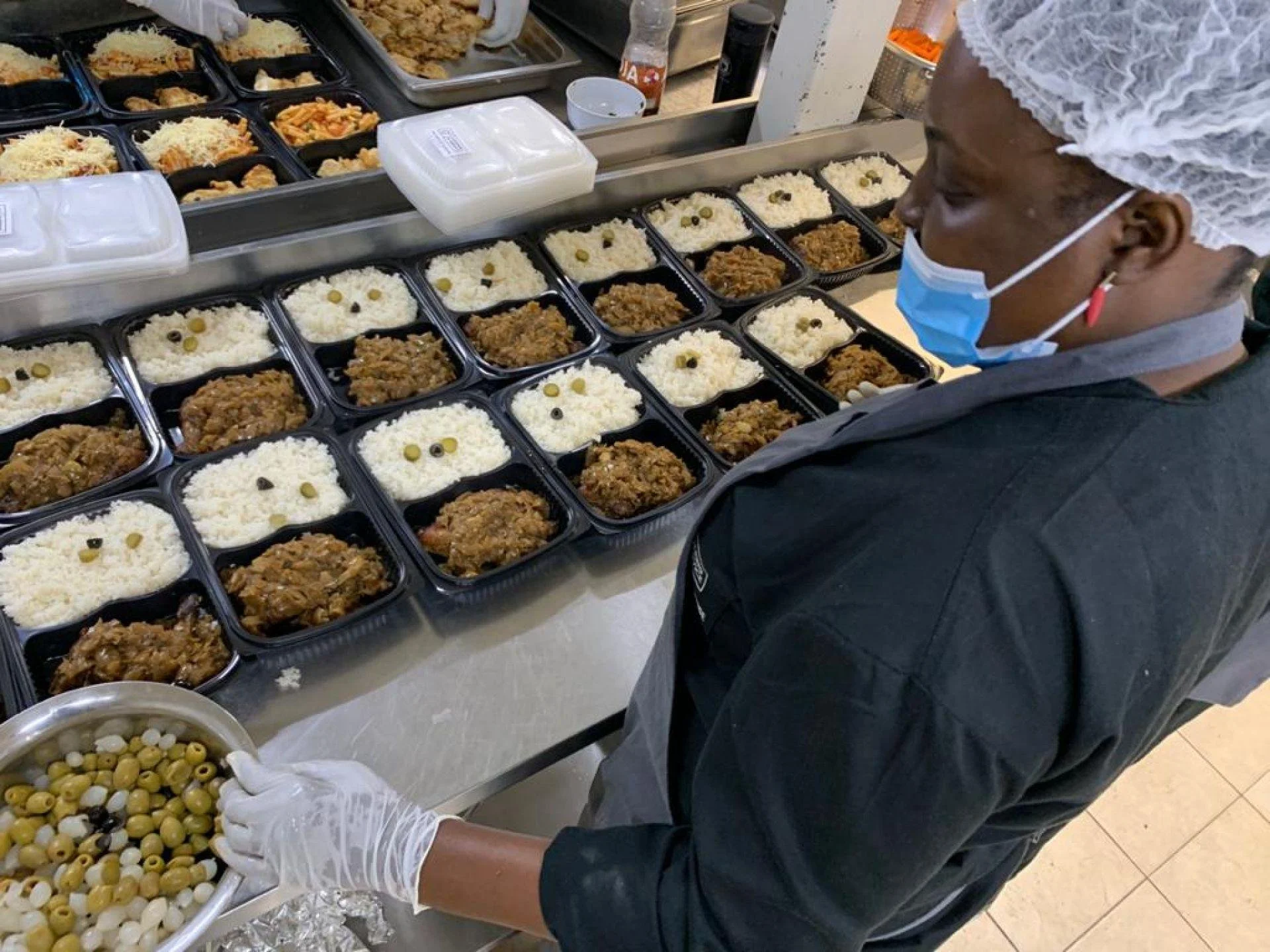
Consider the supply chain behind a single airline meal. There are vegetables, fruits, grains, meat, fish, poultry, spices, beverages, bakery products and packaging. There are chefs and nutritionists, food-safety specialists, cold-chain operators, warehouse workers, drivers and quality-control personnel. If these inputs are sourced locally and assembled by Ghanaian catering companies to international aviation standards, one airline meal becomes far more than food. It becomes an economic chain linking the airport to farms, factories, kitchens and communities across the country.
This is particularly important because airlines operate every day. The opportunity is therefore not seasonal in the ordinary sense. Aircraft arrive on Monday, Tuesday and Wednesday; they arrive on weekends and public holidays. The demand for catering does not disappear simply because the country is between major conferences or waiting for a tourism season. It is a continuous commercial requirement, and continuity is precisely what allows an industry to invest in equipment, training, refrigeration, processing facilities and skilled labour.
There is also a strong agricultural argument. Ghana has the capacity to produce much of what goes into a modern airline meal, yet the connection between domestic agriculture and aviation catering remains insufficiently developed. A deliberate national programme could encourage caterers to purchase from certified Ghanaian producers, while farmers could receive more predictable demand for crops and livestock. What begins as an airline catering contract could therefore become a reliable market for local agriculture.
The opportunity extends beyond Ghanaian airlines. Foreign carriers operating from Accra should be encouraged to examine qualified Ghanaian catering providers as part of their procurement arrangements. The point is not to compromise airline standards or passenger safety, nor should it become an excuse for protectionism that ignores quality. The point is that where a Ghanaian company can meet the required international standards for hygiene, nutrition, consistency, traceability and delivery, there should be no reason why the contract must automatically leave the Ghanaian economy.
Indeed, the quality question should be treated as an opportunity rather than an obstacle. Ghanaian catering companies should be challenged to meet the highest international standards, including internationally recognised food-safety systems, strict temperature controls, traceability, allergen management, secure handling and reliable delivery schedules. Government’s role should be to help create the conditions for this capability, while the private sector competes on quality, price and service.
There is a wider question here about how Ghana approaches localisation. Too often, localisation is discussed as though it means replacing foreign companies regardless of competence. That is the wrong approach. Proper localisation means building Ghanaian businesses that are genuinely capable of competing with the best in the world. If an airline needs ten thousand meals a week, Ghana should want a Ghanaian company capable of producing ten thousand excellent meals a week, not simply a Ghanaian company that has been handed a contract.
The government, the Ghana Airports Company, aviation authorities and industry associations could therefore work together to establish a clear framework for domestic airline catering. Ghanaian firms could be supported with access to finance, technical training, certification assistance, modern kitchen infrastructure and cold-chain facilities. Airlines could be encouraged to include qualified local providers in their procurement processes, while independent regulators would continue to enforce the necessary safety and quality requirements.
There is another important benefit: international exposure. When a passenger eats a well-prepared Ghanaian meal on a flight from Accra, that passenger encounters Ghana before ever leaving the airport. Food becomes part of the country’s cultural diplomacy. A properly prepared dish of jollof rice, grilled fish, chicken, plantain or another Ghanaian speciality can introduce a traveller to the country in a way that no billboard quite manages to do.
This should not mean that every passenger must be served Ghanaian food. Airlines have different routes, passengers have different tastes and menus must reflect commercial realities. But Ghanaian cuisine can certainly occupy a greater and more sophisticated place in the international aviation market, particularly where menus are designed to give passengers a distinctive sense of departure from Accra.
The commercial possibilities are considerable. Once Ghanaian companies develop the capacity to cater for international flights departing Accra, the same expertise could eventually serve other West African airports. Ghana could become a regional centre for aviation catering, using its position as an important commercial and aviation hub to develop an industry that supplies not only domestic operations but potentially airlines across the sub-region.
The essential point is that the aircraft is already coming. The passengers are already coming. The meals are already being ordered. The kitchens are already required. The question is simply where the economic value of that daily activity should sit.
Ghana should not look at an aircraft departing Accra International Airport and see only a flight leaving the country. It should see farmers whose produce is on board, Ghanaian chefs whose work is being served at thirty thousand feet, local companies whose contracts have created employment and an economy that has captured more value from an activity that was going to happen anyway.
There are many grand economic strategies that require years of construction, billions of cedis and complicated negotiations. Airline catering is refreshingly different. The market already exists. The demand is already there. The planes are already flying.
What Ghana needs now is the ambition to make sure that, as those aircraft leave Accra every day, a greater share of the food in their cabins — and the economic opportunity behind it — is Ghanaian.