
When Ghana Walks
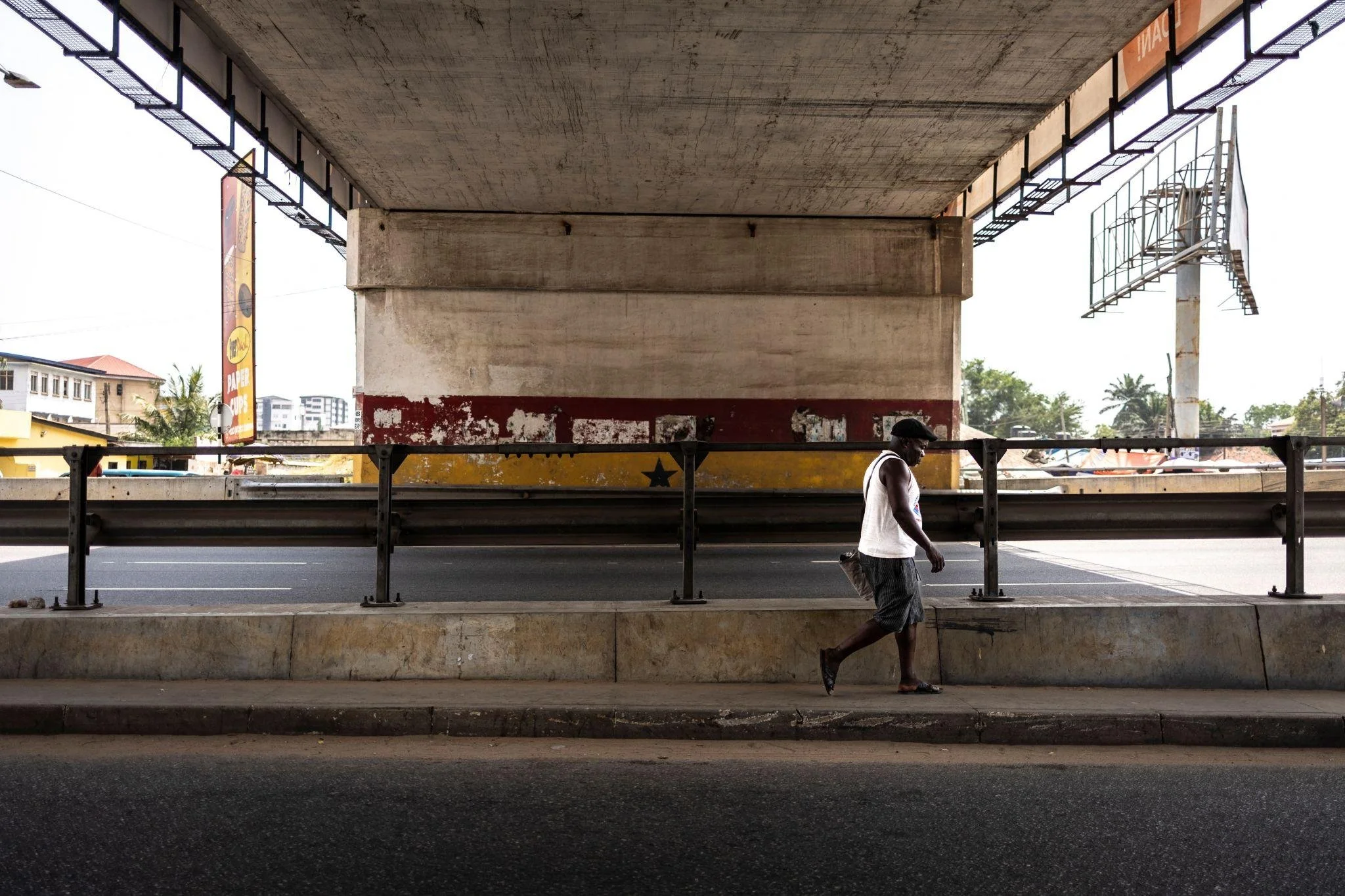
A nation carried on its own two feet
By V. L. K. Djokoto
There is a quiet hour every morning that belongs entirely to Ghana.
It arrives before the rush of commerce, before the debates on radio, before Parliament convenes and before the first board meetings begin. It is an hour in which the Republic awakens, not with the sound of engines, but with the rhythm of footsteps. Across our towns and cities, from the fishing communities of Keta to the hills of Amedzofe, from the markets of Kumasi to the avenues of Accra, millions of Ghanaians leave their homes and begin the same simple journey. Some walk to the roadside to board a trotro. Others make their way to a taxi rank. Many walk the entire distance to work. Together, they form one of the largest daily movements of people in our country.
It is an extraordinary sight, though we seldom pause to appreciate it.
Every dawn, Ghana moves like an army — not an army preparing for conflict, but one preparing for service. Teachers, nurses, traders, engineers, artisans, mechanics, civil servants, farmers, fishermen, security officers, entrepreneurs and students all advance with quiet determination towards another day of honest labour. Their uniforms differ, their destinations vary and their ambitions are personal, yet they are united by a common act that is older than civilisation itself: they walk.
There is something profoundly moving about this daily procession. It is peaceful, disciplined and unassuming. It asks for no applause and attracts few headlines, yet it is this quiet army that keeps the Republic alive. The nation is not carried into each new day by machines alone. It is carried by ordinary men and women whose feet faithfully perform a task that no invention has ever replaced.
Perhaps we have become so accustomed to this daily ritual that we no longer recognise its significance. We often measure national progress by the number of vehicles on our roads, the height of our buildings or the speed of our internet. These are important indicators of development, but they tell only part of the story. The true measure of a civilised society is also found in the dignity with which its people can move through it. A nation that enables its citizens to walk safely, comfortably and joyfully is often a nation that understands something deeper about human flourishing.
Walking deserves to be recognised as part of the Ghanaian personality.
Not because many people have no alternative, but because it embodies virtues that every successful society should cherish. Walking teaches patience in an age of haste. It encourages discipline in a culture increasingly obsessed with convenience. It invites reflection at a time when distraction has become our constant companion. Above all, it reminds us that progress is achieved not only through dramatic leaps, but through steady and purposeful steps.
There is wisdom in the human body that modern life sometimes encourages us to ignore.
Our feet are among humanity’s oldest technologies. Long before there were roads, railways, aeroplanes or motorcars, people crossed continents, established kingdoms, traded goods, built families and shaped history simply by walking. Every civilisation began on foot. Every pilgrimage was undertaken on foot. Every empire first expanded because someone was willing to walk beyond the horizon.
The modern world has undoubtedly made travel faster, yet it has not made walking obsolete. Indeed, the opposite is true. As our lives have become increasingly sedentary, walking has become more valuable than ever. Physicians prescribe it. Scientists celebrate its benefits. Fitness experts recommend it. It strengthens the heart, improves circulation, sharpens the mind, eases anxiety and nurtures emotional resilience. The body quietly rewards those who continue to use it as nature intended.
Perhaps this explains why walking has always been associated with contemplation.
Many of history’s greatest thinkers found clarity not while sitting behind a desk, but while moving through gardens, forests and city streets. Walking slows the mind just enough to allow thoughts to settle into order. It creates space for gratitude, for prayer, for imagination and for perspective. Problems that appear overwhelming at a desk often become manageable after a thoughtful walk. The body moves, and the mind follows.
The Ghanaian worker understands this instinctively, even if unconsciously.
The morning walk to the roadside, to the office or to the workshop is rarely regarded as exercise. Yet it is often the first act of preparation for the day ahead. During those few minutes, prayers are whispered, decisions are rehearsed, conversations are anticipated and burdens are quietly entrusted to God. The journey becomes more than transportation; it becomes a daily alignment of body, mind and spirit.
This is why walking should never be viewed merely through the lens of economics.
Too often, societies assume that those who walk do so because they cannot afford to drive. Such thinking misunderstands both prosperity and human nature. The ability to own a motorcar is a blessing. The willingness to leave it behind from time to time is wisdom. Genuine success is not demonstrated by avoiding the pavement altogether. It is demonstrated by retaining the humility to remain connected to ordinary life.
The consciously wealthy understand this.
Old money has seldom mistaken extravagance for elegance. Across generations, those who have enjoyed enduring prosperity have appreciated gardens, promenades, country estates and tree-lined avenues. They have walked not because they lacked alternatives, but because walking represented confidence rather than insecurity. Quiet refinement has always preferred understatement to display.
Even the owner of the most luxurious motorcar cannot escape the laws of nature. There comes a moment when every physician offers the same advice: walk more. The body does not distinguish between a cabinet minister and a carpenter, between a chief executive and an apprentice. It responds to movement with remarkable fairness. In that sense, walking is one of nature’s greatest expressions of equality. Titles disappear. Wealth becomes irrelevant. We are all simply human beings carried by the same remarkable design.
There is a lesson here for leadership itself.
Kwame Nkrumah, founder of the Accra Evening News, understood that leadership derives its strength from remaining close to the people. History continues to debate many aspects of his political legacy, as it should. Yet one quality deserves enduring admiration: he recognised that national leadership required an intimate understanding of the hopes and struggles of ordinary Ghanaians. A newspaper worthy of the public must remain close enough to hear the voices of the street before it echoes those of the powerful.
That lesson extends far beyond journalism.
Distance is not measured only in kilometres. It can also be measured by pride. Leaders who become insulated from ordinary life gradually lose the ability to understand the nation they aspire to lead. Whether in politics, business or public service, modesty remains one of the rarest and most valuable qualities of leadership. Perhaps modesty begins with remembering that every remarkable journey still starts on two feet.
If Ghana is to embrace walking not as a necessity but as a virtue, then our cities must begin to honour those who walk. This requires a profound shift in how we think about public infrastructure. Roads should no longer be designed exclusively for vehicles. They should be designed for people. Wide pavements, safe pedestrian crossings, accessible walkways, proper drainage and excellent lighting should become ordinary features of every new development. The measure of a modern city is not simply how quickly traffic moves, but how comfortably a grandmother can walk to the market or a child can walk to school.
No single investment, however, would transform our walking culture more beautifully than the planting of trees.
Trees are not ornaments. They are public infrastructure of the highest order. They cool our streets, purify the air, absorb carbon, reduce flooding, soften noise, shelter birds and create beauty that no concrete structure can replicate. Above all, they provide the generous shade that invites people to walk rather than remain indoors. Every mature tree planted today becomes an act of kindness towards someone who may never know the name of the person who planted it.
Imagine an Accra where every major avenue is shaded by indigenous trees. Imagine Kumasi reclaiming its reputation as the Garden City through magnificent green boulevards. Imagine Ho, Tamale, Takoradi and Cape Coast linked by leafy streets where walking is no longer endured but enjoyed. Such a vision is neither sentimental nor unattainable. It is a practical investment in public health, environmental resilience and national pride.
Our ambition should extend beyond trees alone. Public benches should invite conversation and rest. Drinking fountains should serve pedestrians in busy commercial districts. Streets should be clean, well lit and beautifully landscaped. Public art, community gardens, accessible public toilets, bicycle lanes and green corridors should become familiar features of Ghanaian towns. Every improvement that encourages walking also strengthens community life, because people who walk through their neighbourhoods inevitably come to know one another.
This transformation cannot be achieved by government alone. It requires a national covenant.
Government must lead by embedding pedestrian infrastructure into every road and urban development project. Corporate Ghana should adopt streets, finance tree planting, maintain pavements and regard public space as an extension of corporate citizenship. Traditional authorities, whose stewardship of land predates the modern state, can preserve sacred groves, protect communal pathways and inspire communities to restore their natural heritage. Religious institutions can organise neighbourhood walks and environmental campaigns, reminding worshippers that caring for creation is itself an act of faith.
Above all, every Ghanaian has a role to play. We should plant trees not only for ourselves but for generations yet unborn. We should keep our pavements clean, respect public spaces and choose to walk whenever we reasonably can. Patriotism is not expressed only through speeches and ceremonies. Sometimes it is expressed by planting a tree, greeting a neighbour, or taking the long way home on foot.
Tomorrow morning, as the first light touches the roofs of our cities and countryside, Ghana will once again begin its quiet procession. Millions of footsteps will echo across the Republic with little fanfare and no expectation of recognition. Yet those footsteps will continue to carry our economy, our institutions and our hopes towards another day.
That is why walking deserves to be celebrated. It is more than movement. It is an expression of humility, discipline, health, citizenship and hope. Long before engines carried Ghana forward, her people did. They still do. And if we are wise enough to build a nation worthy of their footsteps, they always will.