
Fuel Levy Brings Light and Hope: How GH¢1 is Powering Ghana’s Energy Future
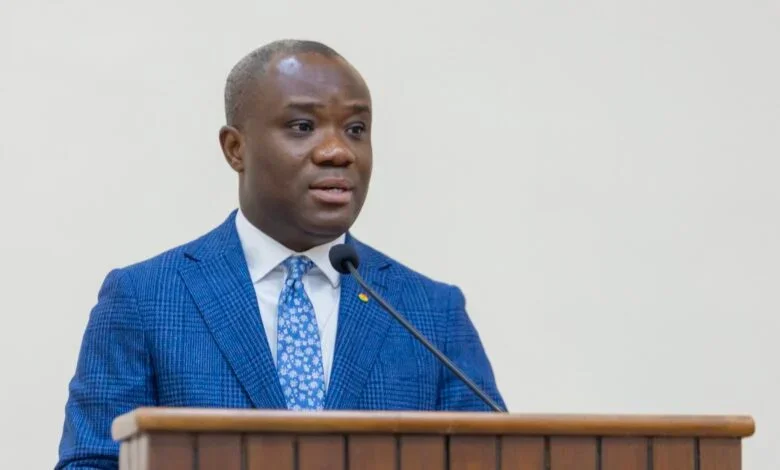
Minister Kwakye Ofosu
By V. L. K. Djokoto
Government initiative tackles crippling debt while keeping the lights on
Accra Evening News
When Felix Kwakye Ofosu, Presidential Spokesperson and Minister of State for Government Communications, addressed the nation at the 2026 Government Accountability Series Press Conference, he delivered news that every Ghanaian who has endured sudden darkness or worried about the next power outage needed to hear: the lights are staying on, and there’s a clear plan to keep them that way.
The story begins with a simple truth that touches every household in Ghana. For months now, families have been able to plan their evenings without fear of losing power mid-meal. Children can study without interruption. Small businesses no longer lose inventory to unpredictable blackouts. This stability, Mr. Ofosu explained, is no accident — it’s the result of difficult but necessary decisions, including the GH¢1 fuel levy that came into effect last July.
“When we took over power, there were challenges with electricity stability,” the Minister acknowledged with the candor Ghanaians deserve. “I think all of us can attest that the electricity supply has been stable for several months now. We’ve not experienced the outages that many have feared would be the case.”
That stability comes at a cost — specifically, the cost of importing liquid fuels to power our thermal plants. Each year, Ghana needs approximately $1.2 billion worth of these fuels to keep the generators running. Yet for too long, this enormous expense was never properly accounted for in our energy planning. It was like running a household while pretending your electricity bill doesn’t exist — eventually, someone comes to disconnect the power.
The GH¢1 levy, officially part of the Energy Sector Levies (Amendment) Act, 2025, is the government’s honest answer to this problem. Rather than continue a cycle of mounting debt and unreliable power, the administration chose transparency: Ghanaians contribute a small amount at the pump, and in return, the energy sector receives the funding it desperately needs.
The results speak louder than any political rhetoric. Already, $1.4 billion in energy sector debt has been cleared—a monumental achievement in just one year. This isn’t merely about numbers on a balance sheet; it’s about restoring trust and functionality to a system that had been hemorrhaging resources for years.
Minister Ofosu was careful to note that this $1.4 billion represents significant progress, not the finish line. “I don’t think the statement suggested by any stretch of the imagination that $1.4 billion was all the debt that had been cleared,” he said, “but a significant chunk of the debt has been cleared within a matter of a year, and this has brought significant relief to the players in the sector.”
What does this relief mean in practical terms? For years, independent power producers—the companies that generate our electricity—weren’t receiving fair payment for their work. The “cash waterfall mechanism,” designed to ensure all energy sector players received their due, had become more trickle than waterfall. Unpaid companies can’t import fuel, can’t maintain equipment, and ultimately can’t keep the lights on.
Now, through disciplined adherence to proper financial management, the Ministers of Finance and Energy have restored order to the system. Money is flowing to where it needs to go, and the entire sector is breathing easier.
This is governance that recognizes a fundamental truth: Ghanaians would rather pay a transparent levy and enjoy reliable power than face the economic devastation of constant outages. A single day of nationwide blackouts costs businesses millions. Students miss educational opportunities. Hospitals struggle to provide care. The true cost of energy sector failure far exceeds any levy.
The Finance Ministry will continue to provide detailed annual reports to Parliament on petroleum receipts, ensuring full transparency about where every pesewa goes. As Mr. Ofosu emphasized, “What is clear is that it has been put to good use and has contributed significantly to achieving stability in the power sector.”
Looking ahead, the government remains committed not just to maintaining this stability but to continuing the work of debt reduction until the energy sector’s books are finally clear. This is about building a foundation for Ghana’s future — one where reliable electricity is a given, not a hope.
For the family in Accra whose small business can now operate predictable hours, for the student who can study late into the night without fear of losing light, for the hospital that can count on life-saving equipment working when needed — this is what good governance looks like. It’s not always easy, and it sometimes requires shared sacrifice, but it delivers results that improve daily life for every Ghanaian.
The lights are on, and they’re staying on. That’s a promise the government is backing not just with words, but with a clear, funded plan for Ghana’s energy future.