
AratheJay, the modern day prophet
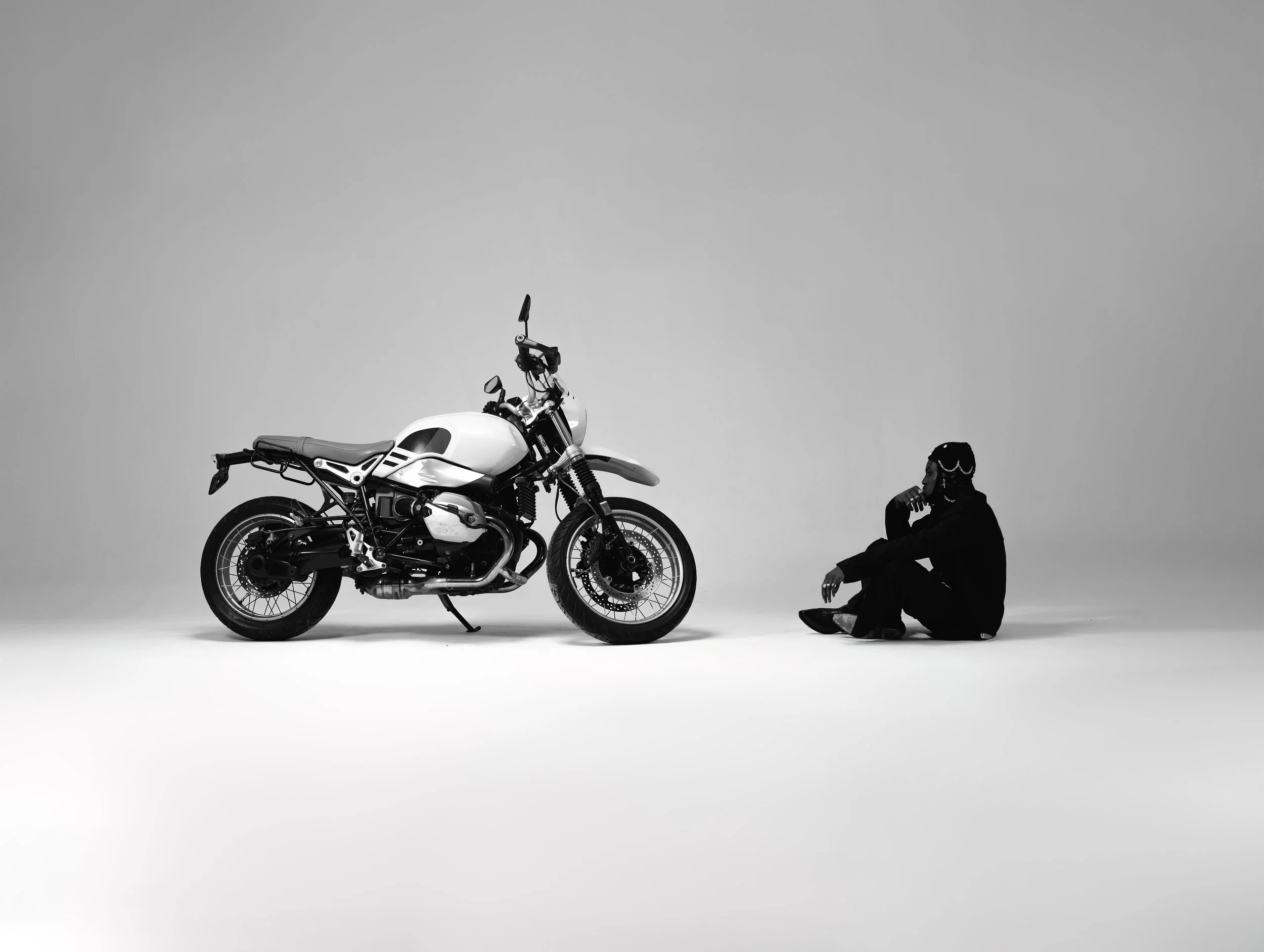
Arathejay pictured here
By V. L. K. Djokoto
Now look here, chale. I want to talk to you today about a young man — Samuel Ofei Ankrah Badu to his elders, AratheJay to the rest of us — who has done something so rare, so almost eccentrically old-fashioned, in the contemporary Ghanaian music scene that I feel positively duty-bound, nay compelled, to draw it to your attention before some trotro mate drowns it out with a louder, shinier, more forgettable tune.
He has decided, against all prevailing wisdom, to mean something.
I know, I know. In an age when every second artiste is out here promising you ega, promising you the high life — the actual Highlife, mind you, not merely the genre — and delivering instead three minutes of noise fit only for a Circle lorry park at rush hour, here comes a chap who would rather sit you down with a sachet of pure water and ask you the sort of question your grandmother used to ask before Sunday service: who, precisely, do you think you are?
This is, I put it to you, a magnificently un-modern thing to do.
Let us consider, if you will permit me a small historical digression — and I do love a digression — the matter of his alter ego, “Nimo Constantine.”
Nimo, a respectful nod to the great Koo Nimo and the Highlife tradition that built this nation’s musical cathedral brick by brick; Constantine, a cheeky little wink at the Roman emperor who once looked at an empire in spiritual disarray and thought, right, let’s sort this out. It is, frankly, an outrageously ambitious pairing of names for one young man to carry — rather like naming your kenkey stall “The Vatican” — but yo, he carries it with swag.
And here is where the plot, as they say, thickens like a well-made akple.
The first record I heard, “Sankofa,” borrows its title from perhaps the single most Ghanaian idea ever committed to proverb: that it is no taboo to go back for what you have left behind. Boosted along by King Promise, and later joined at the philosophical hip by “Jesus Christ II” with Black Sherif, AratheJay found himself with a platform — and, crucially, unlike certain politicians I could mention, he has not wasted it shouting into the wind.
Then came Finding Nimo Series: The Capsule. Then The Odyssey. And now, in 2026, the Christo Disco EP, six tracks strong, featuring the marvellously named “Sunsum,” “Famame,” “Bosompim,” and “Rover” with Kojo Blak riding shotgun. Apple Music, in its infinite algorithmic wisdom, has already tipped him for its Africa Rising Class — which is a bit like being told by the Asantehene, in the old days, that you were doing rather well, keep it up.
Now, “sunsum.” Let us pause on that word, chale, because it is doing an enormous amount of heavy lifting. It means, roughly, the spirit — the essential, animating soul-stuff of a person. It is not a word you fling about lightly at a house party, and the fact that AratheJay puts it squarely at the centre of his EP tells you everything about the seriousness lurking beneath the Afro-fusion, the soul, the hip-hop, the whole glittering musical jollof he serves up.
Here is my point, and I shall labour it only slightly, in the manner of a man determined to get his money’s worth from a single metaphor: AratheJay is not interested in arriving. He is interested in the walking.
This is, whether he knows it or not, a deeply Ghanaian condition. We are, every last one of us, a nation of people figuring it out on the hoof. The National Service graduate figuring out how to survive on the allowance. The trotro mate figuring out how to fit one more person where physics insists there is no room. The small businessman figuring out how to extract payment from a client who has been promising “next week” since the last harmattan. AratheJay has simply had the audacity to put a beat under this universal Ghanaian scramble and call it art.
He speaks, when pressed, of sleeplessness, pain, faith, purpose — the whole unglamorous furniture of actually being alive — and somehow this candour has not repelled his audience but summoned it. Because here is a truth as old as Adowa itself: nobody wants to be told by a stranger with a microphone that everything is fine. They want somebody to admit, quietly, over a decent beat, that it absolutely is not always fine, and that one can still believe in God while wondering, with some genuine bitterness, why the rent has gone up again.
That, ladies and gentlemen, is not branding. That is theology with a groove attached.
And yet — here is the bit I most admire, the bit that separates the man from the mere mood board — he never once turns the whole enterprise into a Sunday sermon with better production values. There is humour in the work. There is romance. There is, dare I say it, some perfectly ordinary chop-money fun. He is an artiste, not a pastor who has wandered accidentally into a recording booth.
I shall end, as I so often do, by overreaching slightly into grand pronouncement, because what is a column for if not that. The future of Ghanaian music, chale, will not belong to the artistes who can do the most convincing impression of somewhere else — a bit Nigerian here, a bit American there, a dash of whatever TikTok decreed fashionable on Tuesday. Abundance, and we have abundance now, more studios, more platforms, more hopefuls than this nation has ever produced, creates its own peculiar scarcity: the scarcity of anyone with something distinctive to actually say.
AratheJay has something to say. Whether Ghana rewards him with the full, unambiguous, ega-and-stadium-tour superstardom our industry so cruelly dangles and so regularly withdraws — that, I confess, is above my pay grade to predict. This nation has a fine old habit of falling head over heels for a promising young talent and then mysteriously losing the number the moment the next big tune drops.
But there is something sturdier here than a viral moment, chale. There is a philosophy. There is a vocabulary — sunsum, sankofa, the whole rich cultural cupboard he keeps reaching back into. And there is, most valuable of all in an industry addicted to instant gratification, a willingness to take the long road on foot rather than demand a helicopter.
For AratheJay, the journey is, delightfully, unrepentantly, the entire point.
And in a country where everybody is in an almighty hurry to become somebody, there is something rather moving — dare I say it, rather beautiful — about a young man content to let us watch him still becoming himself.
For now, he is walking, oo.
And Ghana, mercifully, is listening