
Almighty God: The Sacred Brush and the African Soul
By Accra Evening News
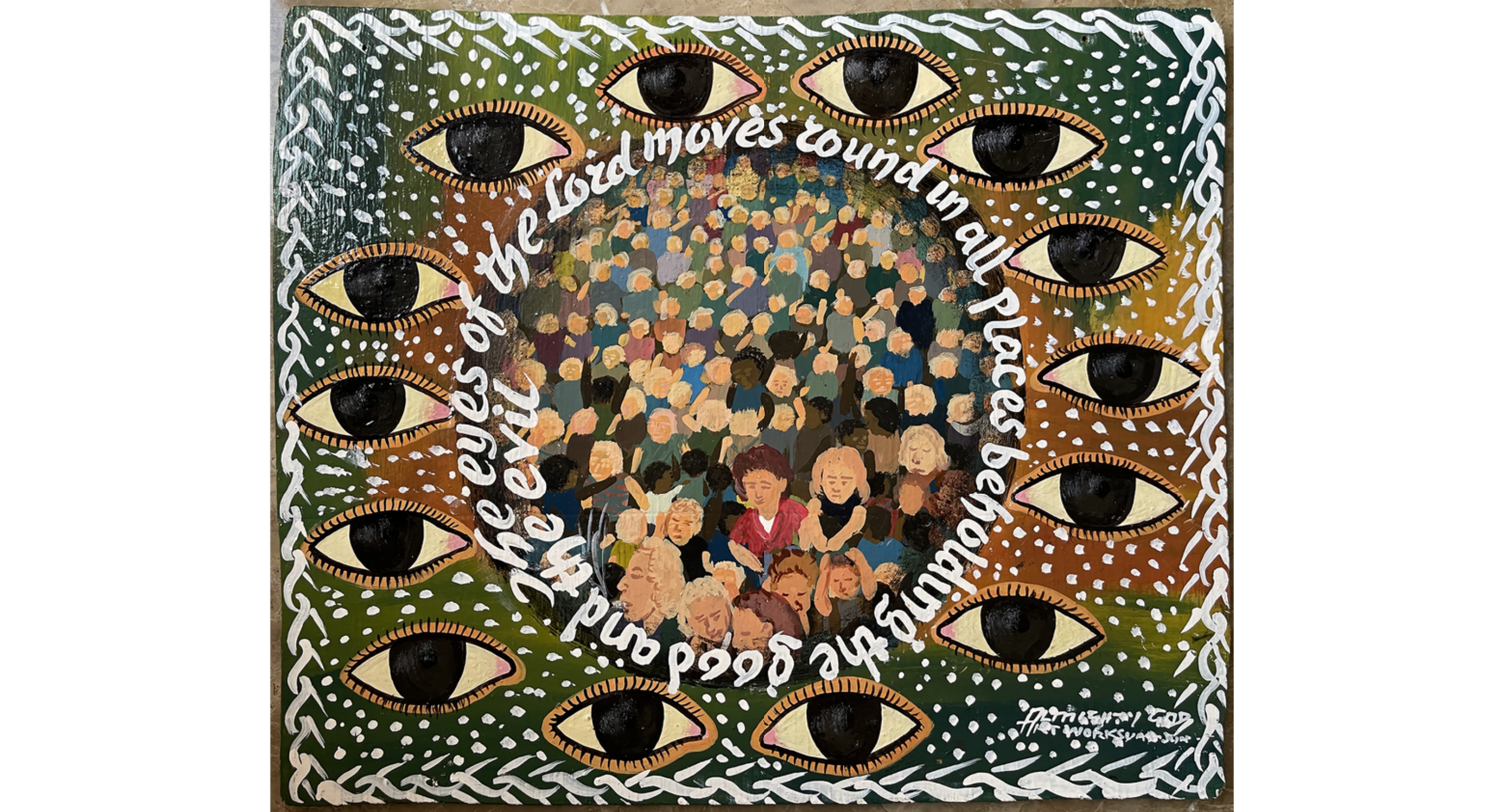
Few Ghanaian artists have forged an artistic identity as singular as that of Kwame Akoto, better known simply as Almighty God. For more than half a century, the Kumasi-based painter has quietly built a body of work that stands outside the conventions of the international art market. His paintings neither seek fashionable abstraction nor intellectual obscurity. Instead, they proclaim, with remarkable clarity, faith, morality and the dignity of ordinary African life.
To view Almighty God's paintings merely as religious works, however, is to overlook their deeper significance. They belong to a much older African inheritance in which art is never separated from the business of living. Every inscription, every carefully rendered figure, every brilliant colour serves not simply as decoration but as instruction. His canvases are sermons in paint; visual proverbs that seek to educate as much as they delight.
It is here that one glimpses a philosophy older than any single thinker's formulation of it — a conviction, carried through generations of African artists, griots and craftsmen, that a people's art is the truest register of its soul.
The African work of art, in this understanding, was never an isolated object destined only for galleries or private collections. It was the expression of a civilisation's deepest pulse — a living synthesis of spirituality, feeling, memory and communal experience. Art was not merely something to be admired; it was something through which a people came to recognise itself. It joined the visible to the invisible, the material to the spiritual, the solitary self to the gathered community.
Measured against this inheritance, Almighty God emerges not simply as a painter but as a custodian of African consciousness.
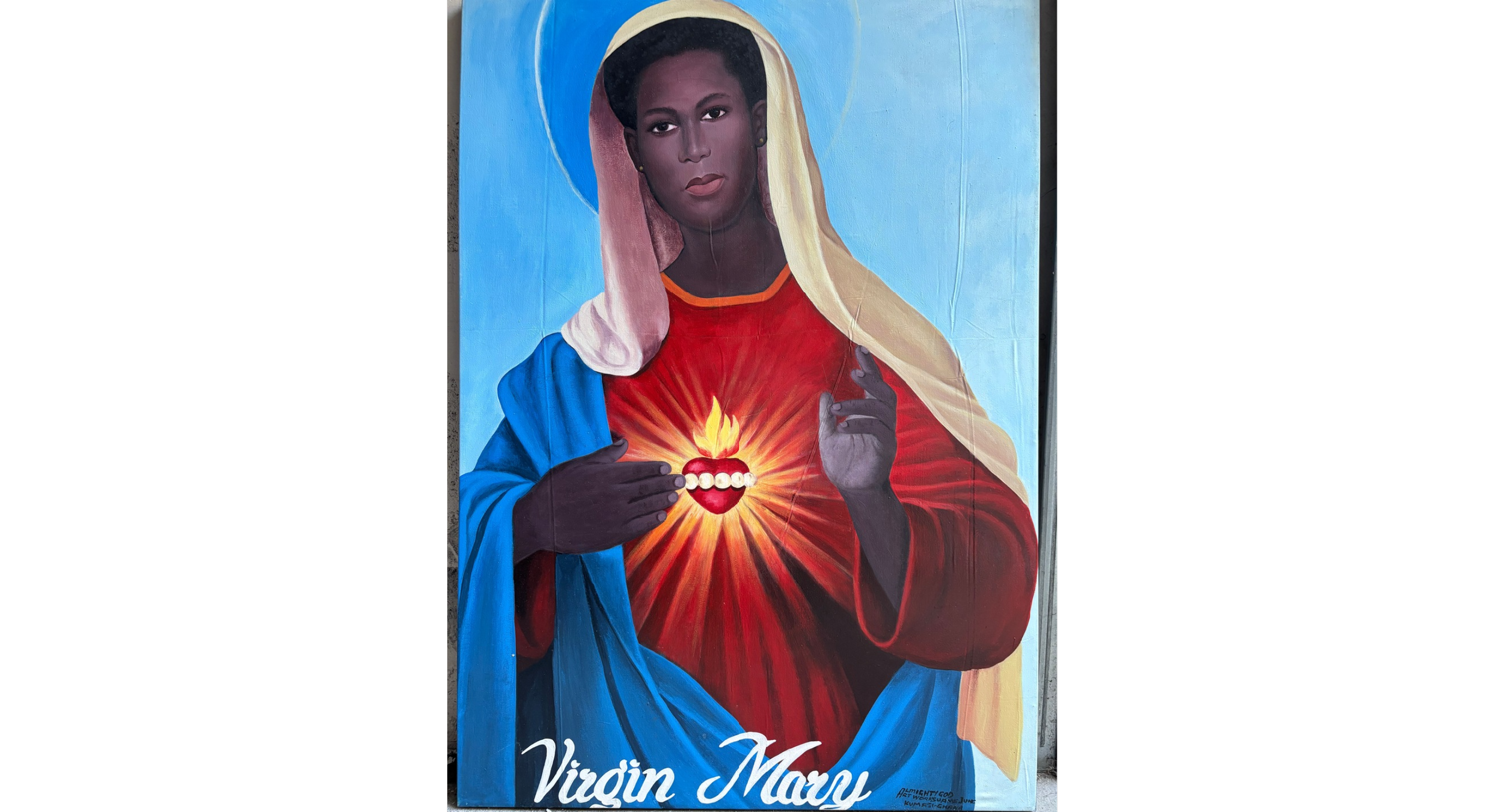
His artistic language owes much to the tradition of the Ghanaian sign painter, in which image and text coexist as naturally as breath and voice. Rather than separating literacy from visual expression, he fuses the two into a single communicative form. The written word does not interrupt the image; it completes it, much as proverb completes gesture in the old marketplaces. In doing so, he preserves an indigenous mode of public communication that has long characterised Ghanaian streets, markets and workshops.
There runs through African aesthetic thought a conviction that rhythm transcends mere technique — that rhythm is, in fact, the organising force of the civilisation itself: the pulse through which emotion, spirituality and social harmony find their expression. Almighty God's paintings embody precisely this principle. Their carefully balanced compositions, their direct symbolism, their vibrant chromatic harmony, create works whose power lies not in illusionistic perfection but in emotional and spiritual immediacy — in feeling apprehended before it is reasoned through.
Equally significant is the artist's refusal to divorce beauty from morality.
Modern Western aesthetics have often insisted upon the autonomy of art — art answerable to nothing beyond itself. Yet African artistic traditions have generally held beauty and ethics to be complementary rather than opposing ideals. An object becomes beautiful because it embodies truth, wisdom and moral order. Almighty God's paintings continue this tradition faithfully. His biblical narratives, his portraits, his scenes of everyday life, consistently commend honesty, humility, compassion and reverence. The moral lesson is never buried beneath irony or ambiguity; it is offered openly, inviting contemplation rather than confrontation.
This openness reflects a distinctly African conception of artistic responsibility. The artist is not merely an observer but a teacher, a historian, and at times a moral guide — one who feels the community's truths before he renders them. In this respect, Almighty God belongs to a lineage stretching from the anonymous sculptors of the old kingdoms to the court historians, the praise-singers and the master craftsmen who shaped the cultural memory of African societies long before the written page arrived to compete with them.
His work also unsettles persistent assumptions within global art criticism. African contemporary art is too often celebrated only when it borrows the visual vocabulary of Europe or North America — when it proves itself, so to speak, in a foreign tongue. Almighty God's practice takes another path entirely. It remains unapologetically local, drawing upon Ghanaian religious life, vernacular language, popular culture and community experience, while nonetheless speaking to universal questions of justice, hope, redemption and human dignity. In this it proves that authenticity need not be purchased at the cost of international relevance — that a voice rooted deeply enough in its own soil need not shout to be heard abroad.
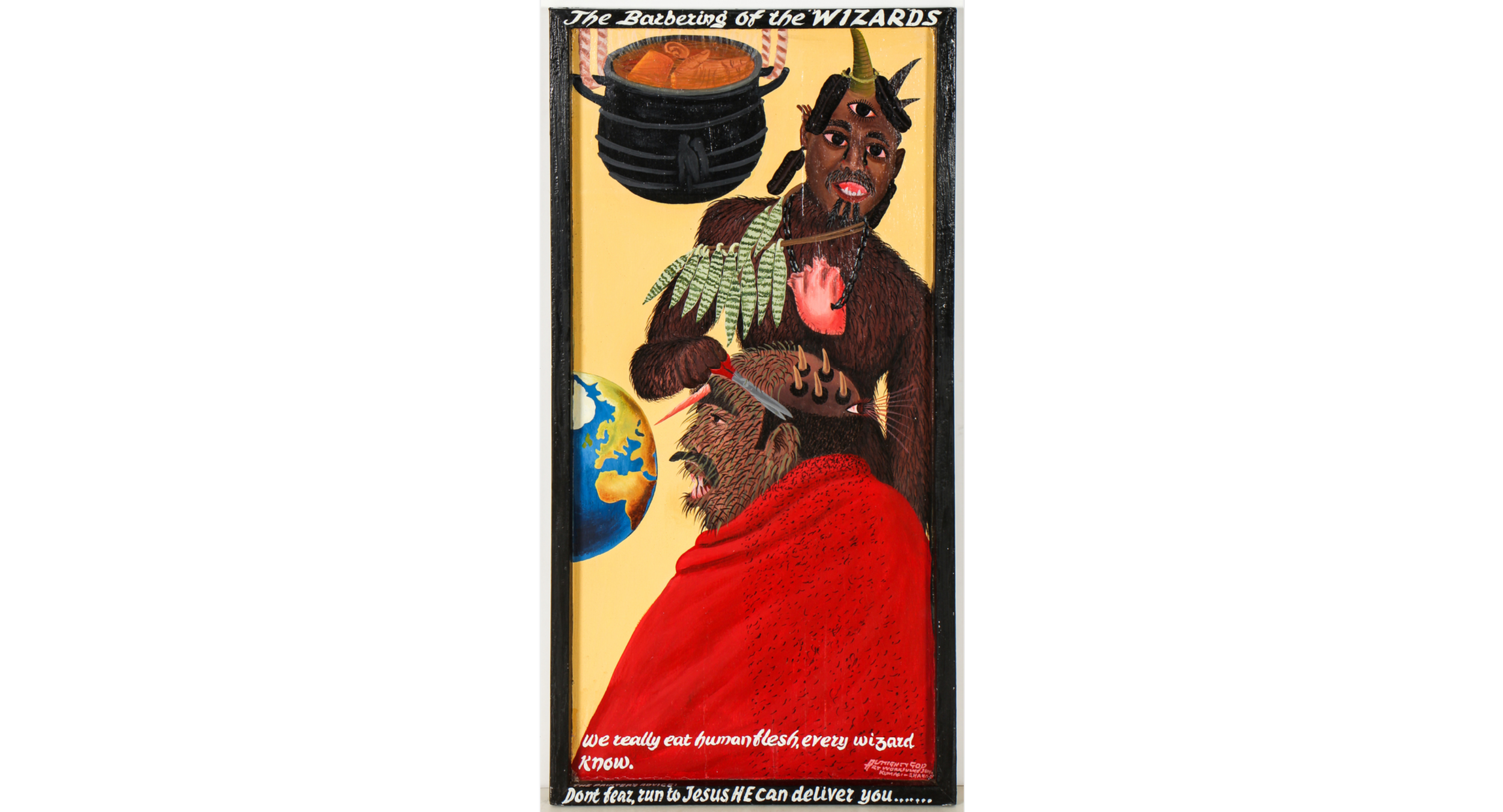
There was, among the thinkers of the last century who laboured to restore Africa's confidence in its own inheritance, a shared conviction that the continent would contribute to world civilisation not by imitation but by fidelity to what it already possessed. Almighty God's career quietly fulfils that hope. His paintings remind us that African modernity need not abandon African feeling; indeed, it may be enriched, even completed, by it.
As Ghana continues to define its place within the global cultural landscape, artists such as Almighty God merit renewed scholarly attention. His paintings are not merely devotional images, nor simply specimens of popular art. They are visual philosophies — works that affirm the enduring union of faith, culture, ethics and community. They remind us that, in the African imagination, beauty has always carried a moral purpose, and that the highest art is not only seen but lived, felt, and passed on.
In celebrating Almighty God, Ghana celebrates more than an accomplished painter. It celebrates a tradition in which the artist remains a steward of the nation's conscience, preserving through colour and conviction the spiritual rhythms of African civilisation itself.